Blog
Guides and comparisons for Shopify SEO
How to turn your Search Console data into articles that rank, and straight comparisons of the tools that claim to do it for you.
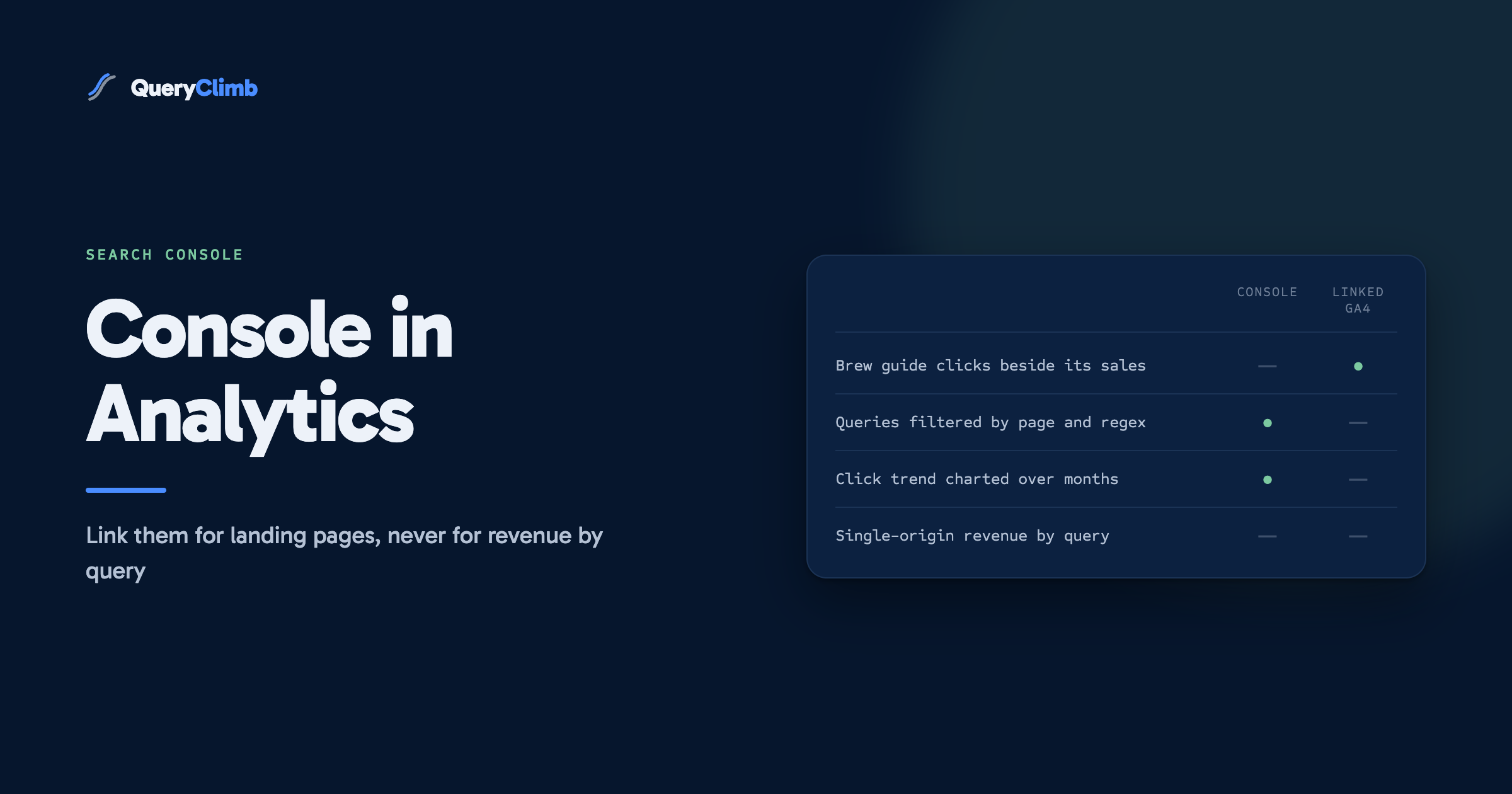
Search Console in Google Analytics: how to link them, and what the link cannot do
Linking Search Console to GA4 takes five minutes and one hidden step most people miss. Here is the setup, the permissions it needs, the two reports it gives you, and the question about revenue by keyword that it will never answer.
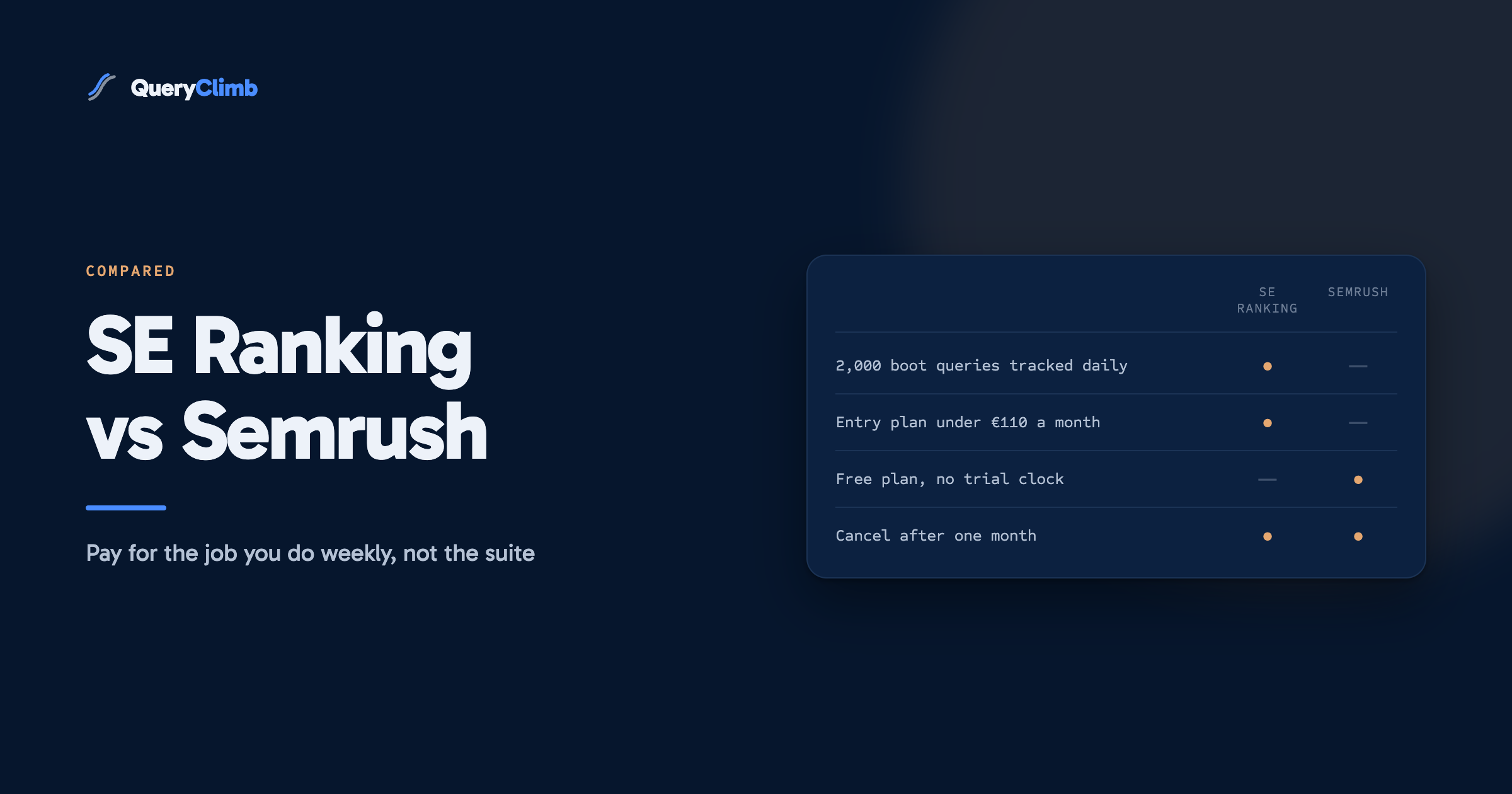
SE Ranking vs Semrush for one store: compared on the jobs a store actually does
SE Ranking and Semrush compared for a single online store, using both vendors' own pricing pages: what each entry plan includes, which jobs each does better, and the jobs where you need neither.
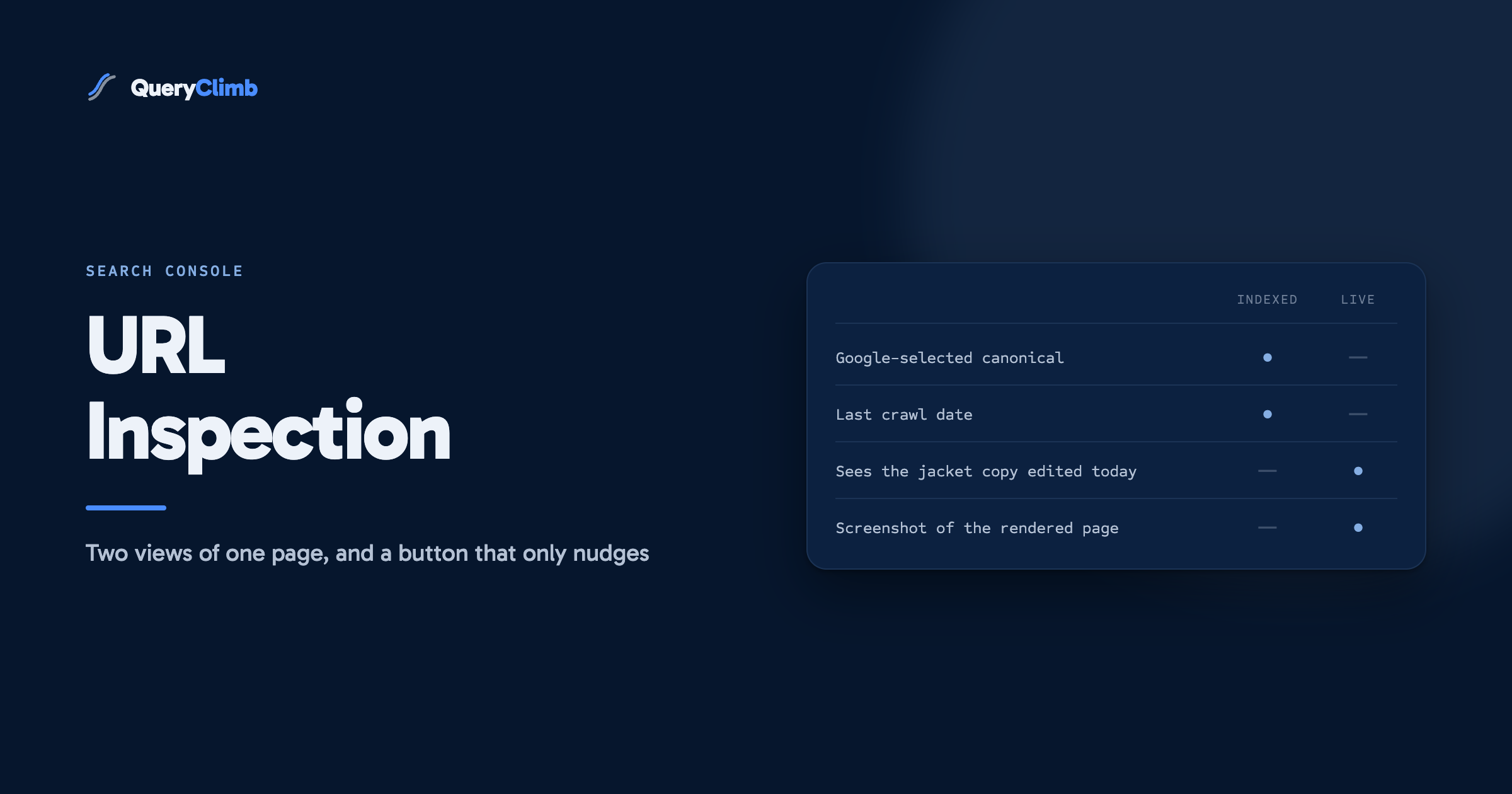
The URL Inspection tool in Search Console: indexed version, live test, and what Request Indexing really does
How to read the URL Inspection tool on a store page, why the indexed version and the live test can disagree, and why Request Indexing is a nudge after a fix rather than a fix in itself.
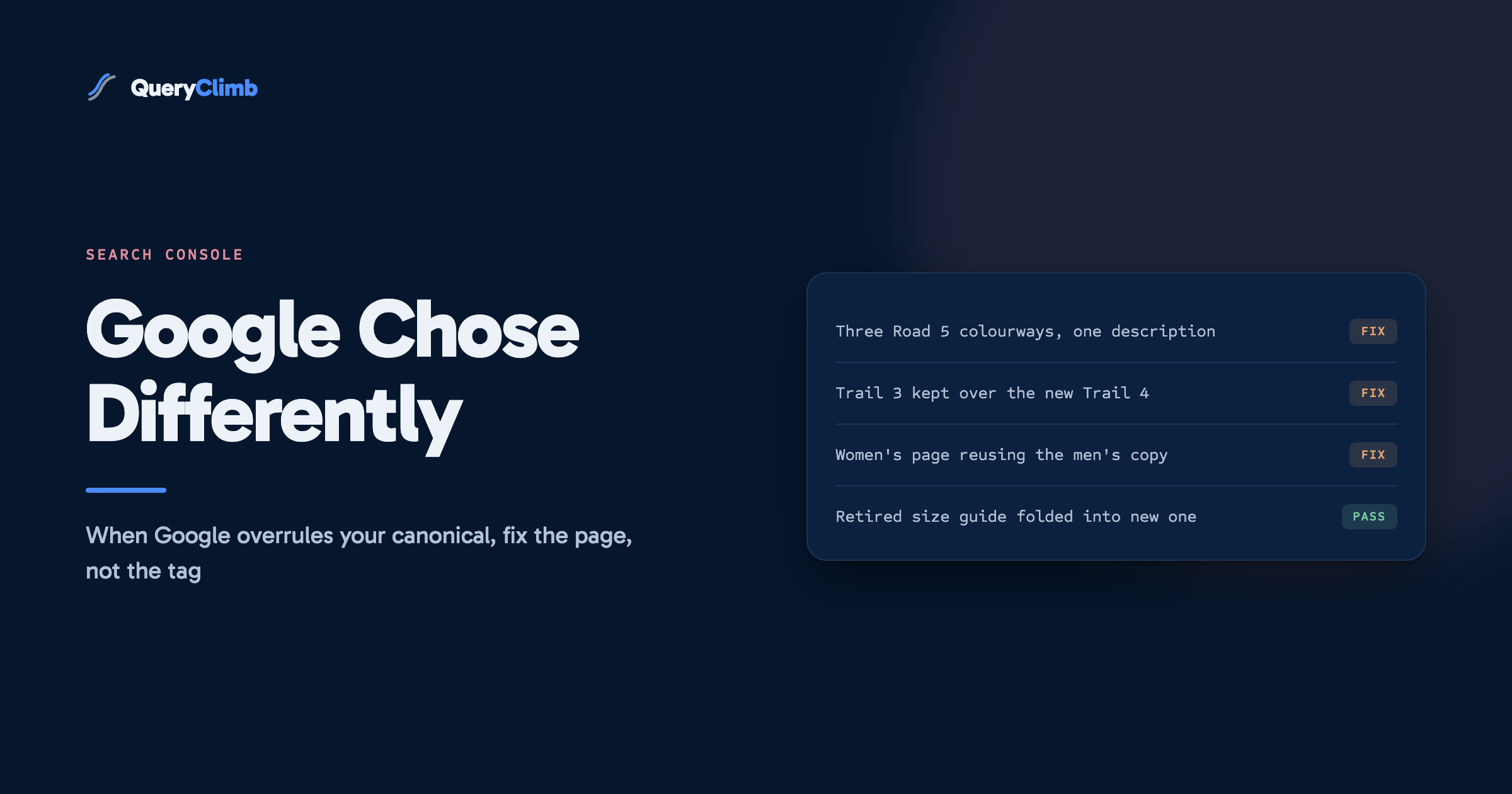
Duplicate, Google chose different canonical than user: fix the page, not the tag
What the Search Console status means, why Google overrules a canonical tag you set on purpose, and why the fix on a store is almost always the content rather than the markup.
People Also Ask: how a store turns the question box into buying guides
Google's People Also Ask box is the best free source of question phrasing a store has, and a poor guide to what is worth writing. How to mine it for H2s and FAQs, what it cannot tell you, and why winning a spot in it barely shows up in Search Console.
The Search Console Removals tool: a six-month hide, not a delete
The Removals tool in Google Search Console takes a URL out of results fast and puts it back about six months later. What it is for, what it is not for, and the permanent fix that has to sit underneath every request.
FAQ schema in 2026: what Google removed, and what a store should do now
Google stopped showing FAQ rich results on 7 May 2026 and removed the documentation in June. Here is what that means for FAQPage markup on a store, what to leave alone, and what is still worth writing.
Blocked by robots.txt, and indexed though blocked: which one to fix
Search Console reports two robots.txt statuses and they mean opposite things. One is usually correct and needs nothing. The other is Google telling you that a disallow rule was never going to remove the page.
Bing Search Console: setting up Bing Webmaster Tools for a store, and the reports worth opening
Bing's version of Search Console, for a store that already uses Google's. How to import your property in minutes, which reports earn a monthly look, what IndexNow does, and why Bing's AI citation data is the reason to bother now.
301 vs 302 redirect: which one to use, and what a wrong 302 costs
A 301 says the page has moved for good and a 302 says it will be back. What Google actually does with each, where 307 and 308 fit, the 302s that were meant to be 301s, and how to check which one your store is sending.
Alternate page with proper canonical tag: the status that means it worked
What the Search Console status means, why a store's count runs into the thousands, and the one check that tells you whether any of it needs fixing.
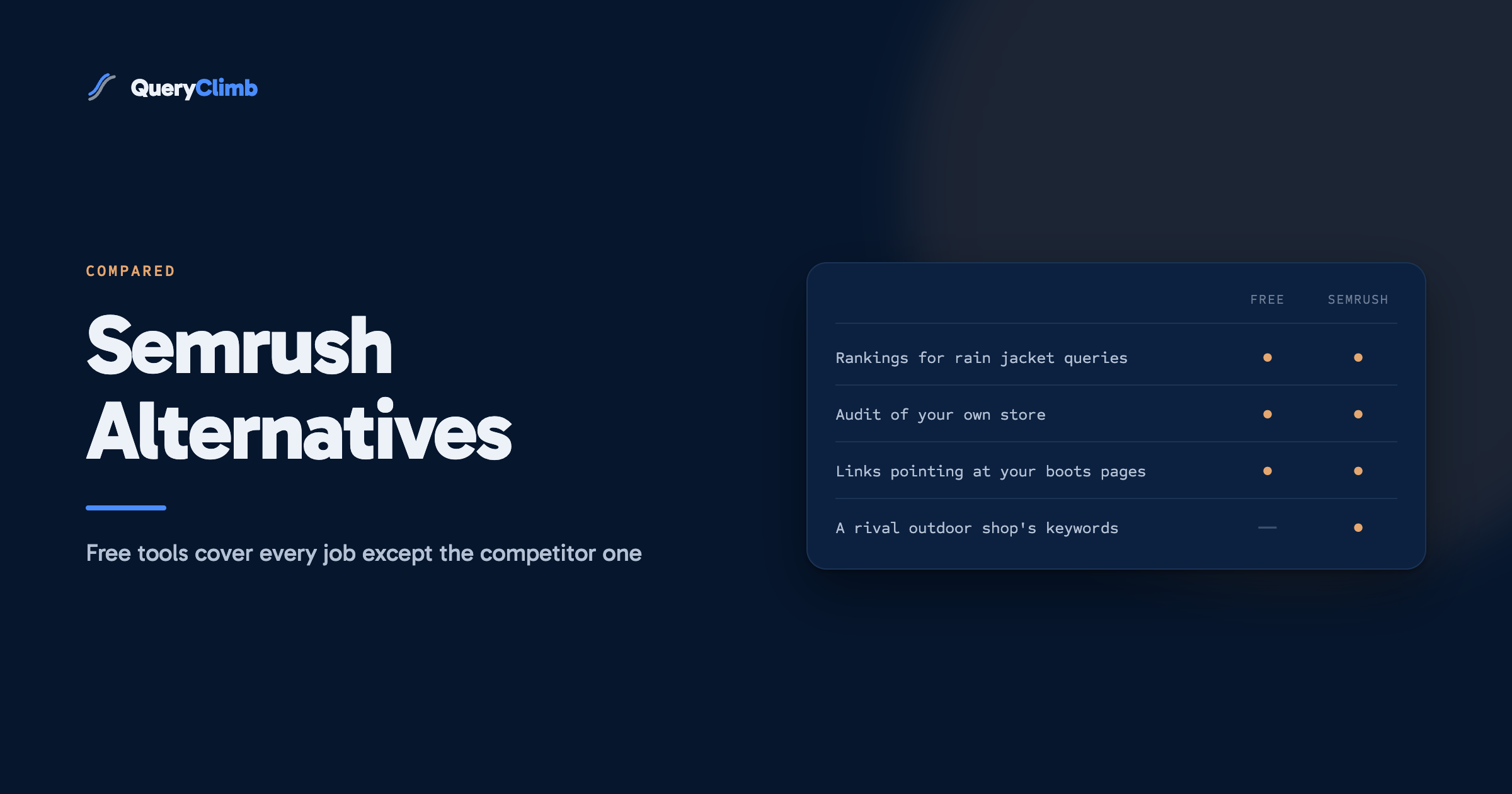
Semrush alternatives for a single store: sorted by the job you pay it for
Most stores pay for Semrush to do three or four jobs, and free tools already cover most of them. The alternatives for each job, with the vendors' own pricing, and the one job where Semrush still earns its fee.
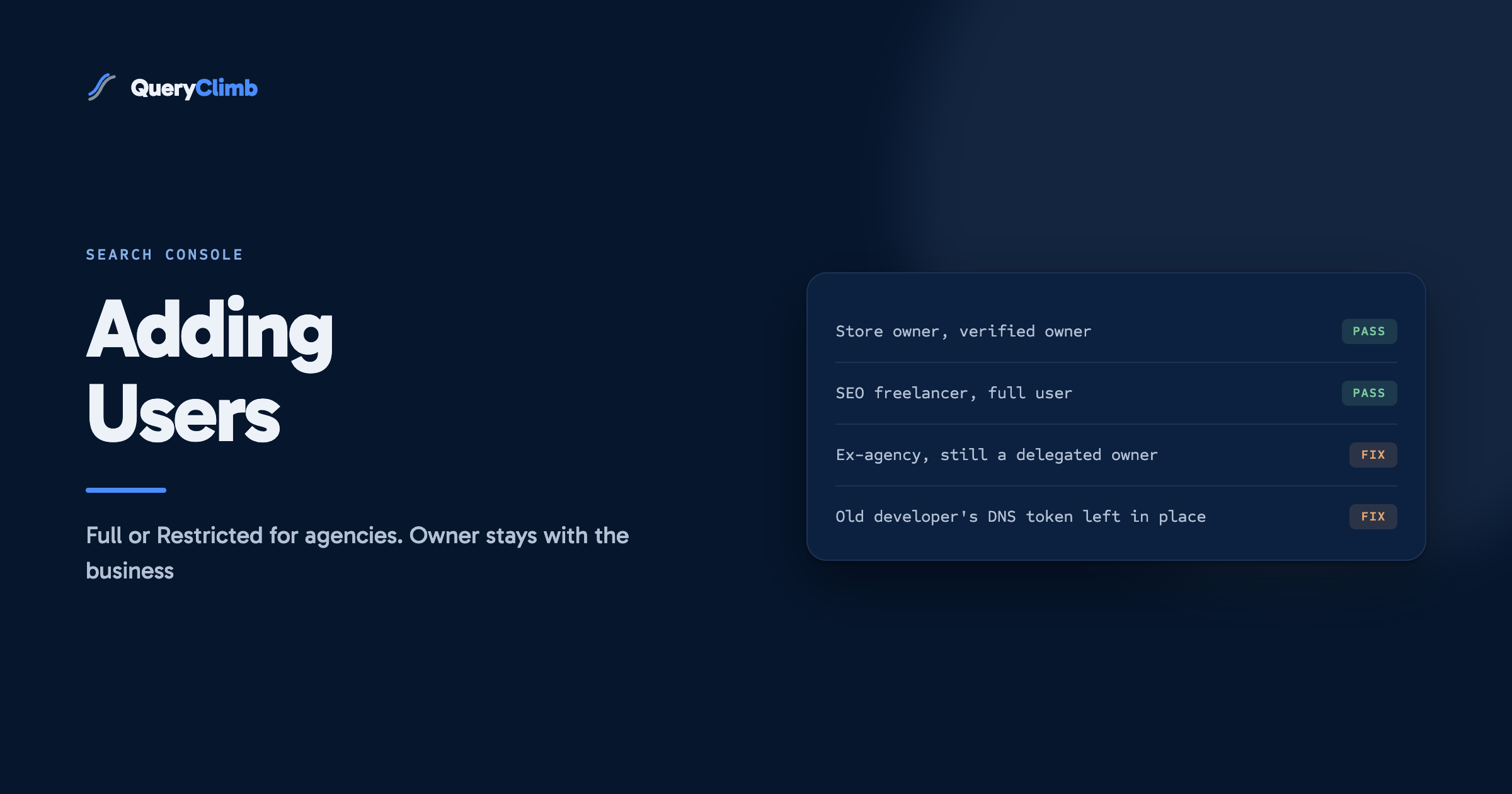
How to add users to Google Search Console, and why your agency should never be an owner
Adding someone to Search Console takes a minute. Choosing the permission level is the part that matters: Full or Restricted for freelancers and agencies, Owner only for the business, and a twice-yearly audit of who still has access.
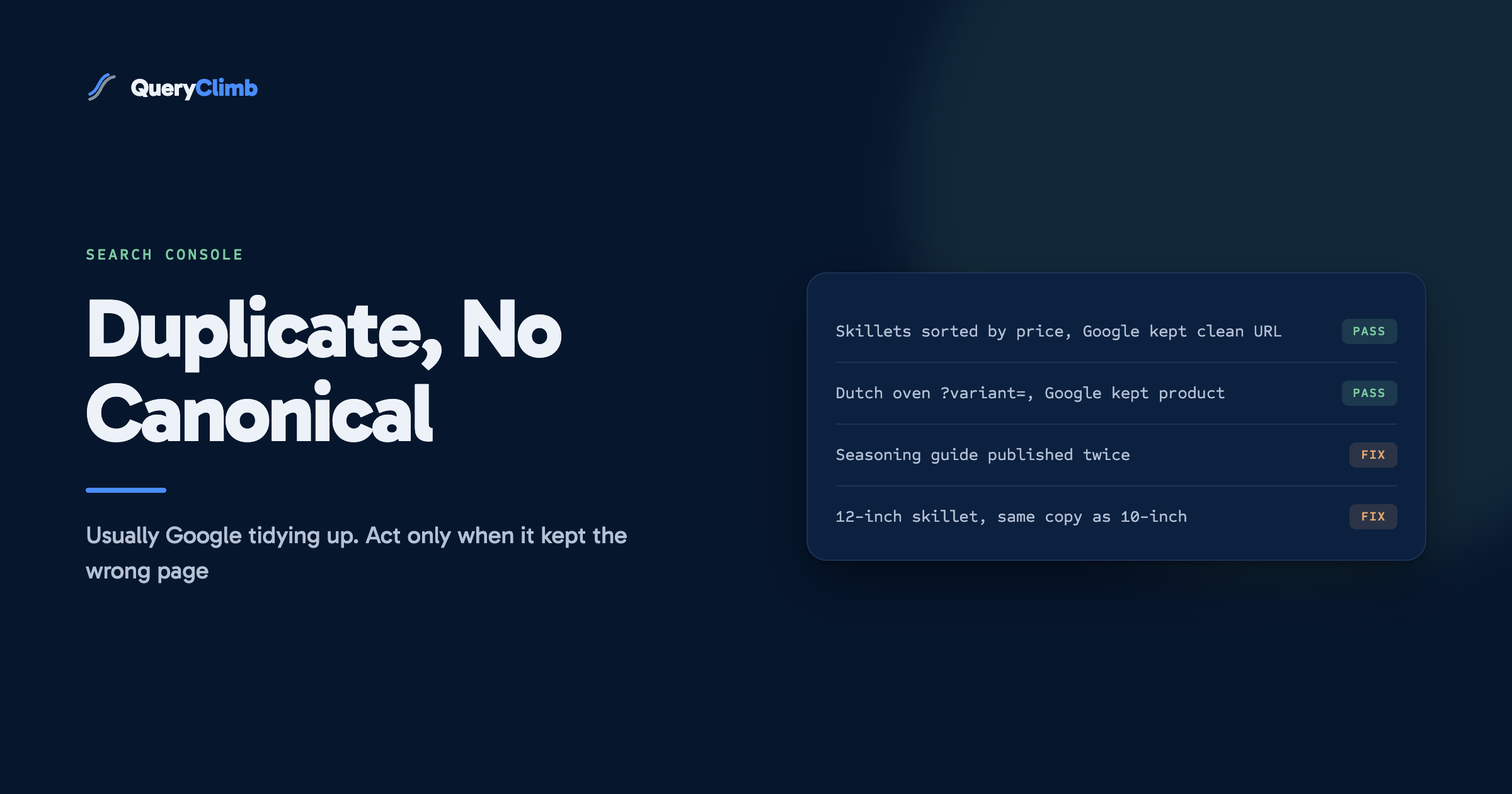
Duplicate without user-selected canonical: when to fix it and when to leave it
What the Search Console status actually means, the store URLs that usually cause it, and the one case where Google has picked the wrong page and you need to act.
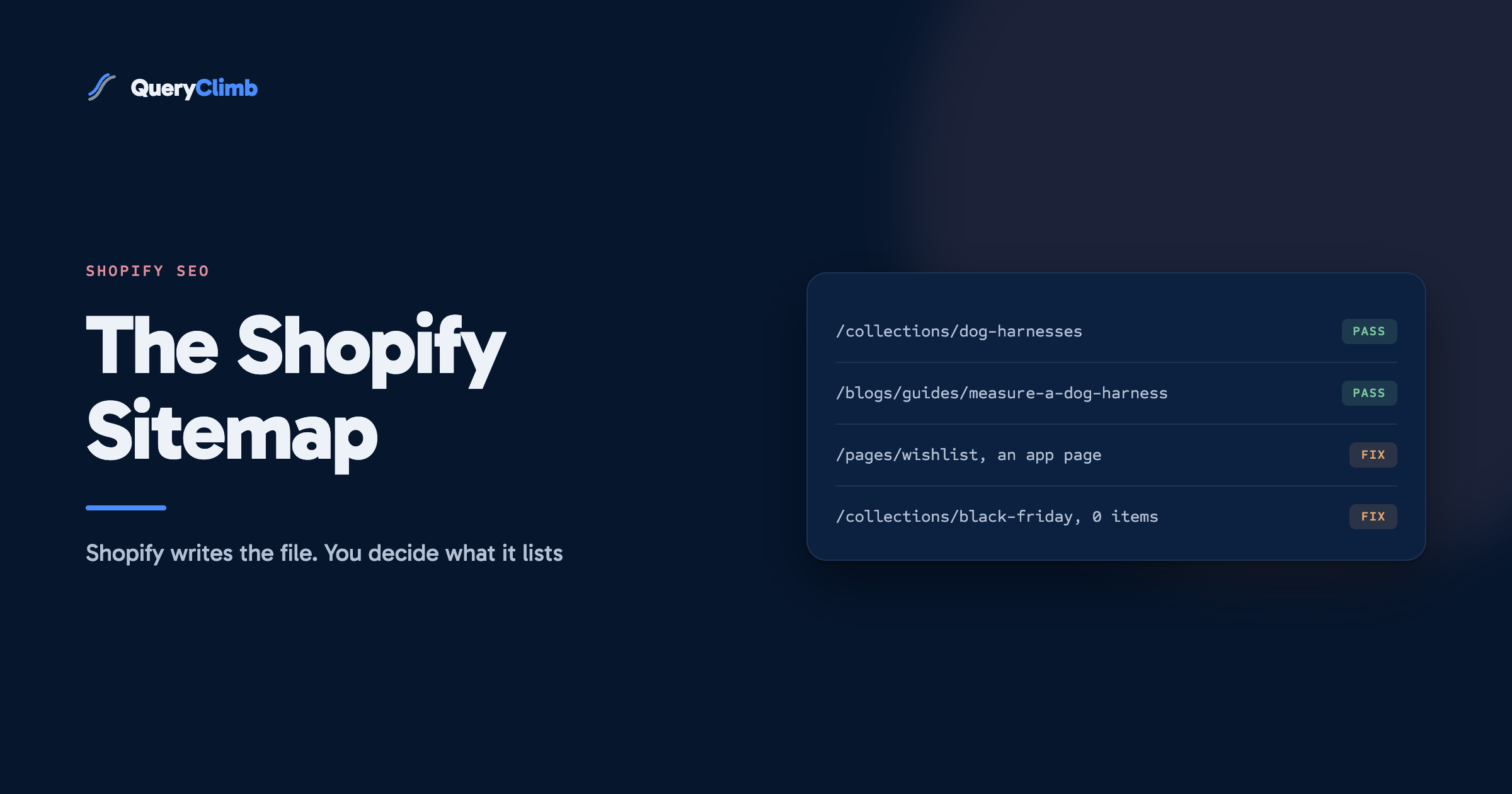
Shopify sitemap: where to find it, how to submit it, and what to take out of it
Shopify builds your sitemap.xml automatically and you cannot edit the file. Where it lives, how to submit it to Search Console, why it says Couldn't fetch, and how to remove the app pages and empty collections it lists by default.
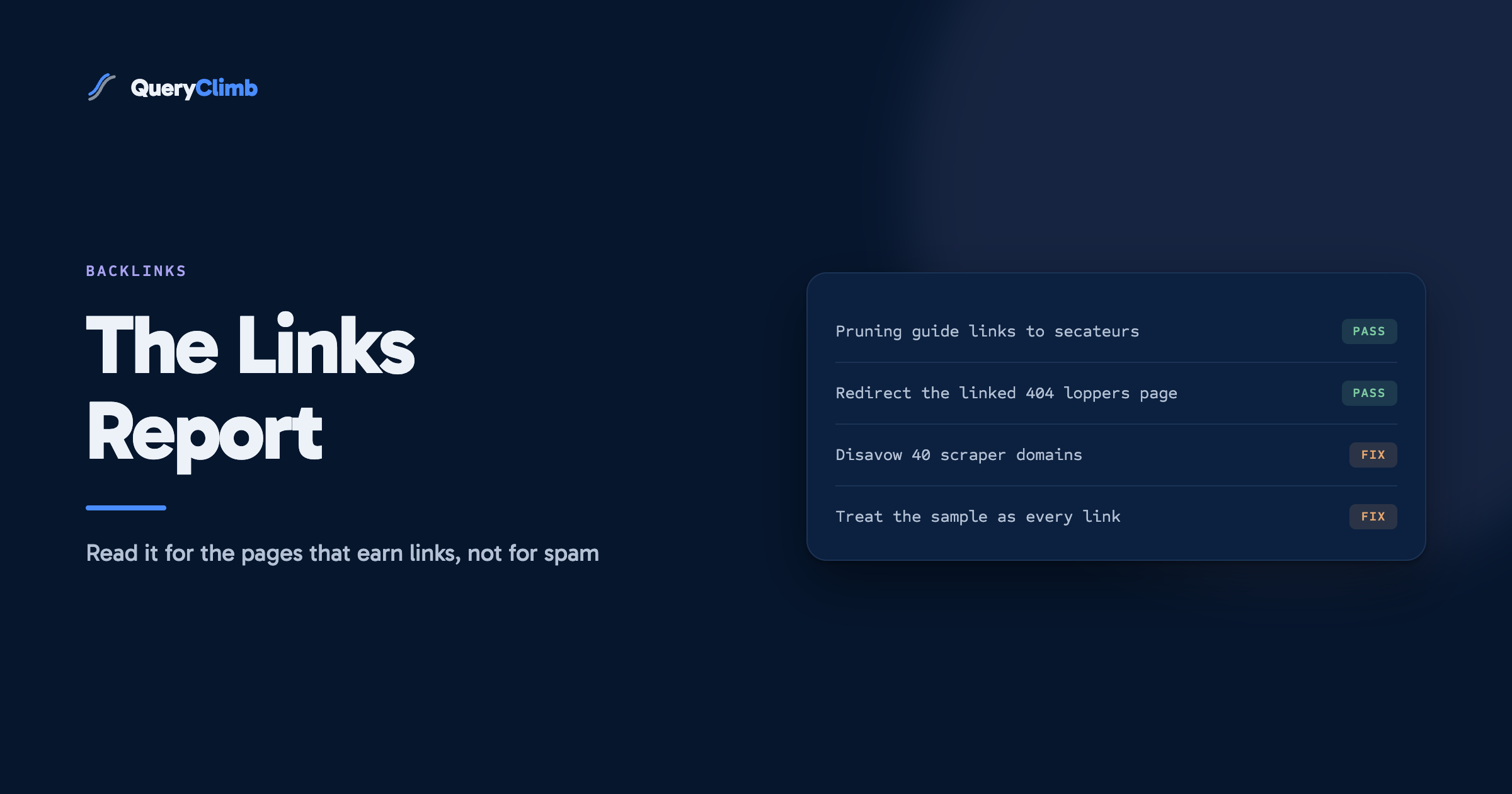
How to check backlinks in Google Search Console, and what the Links report will not tell you
The Links report shows a sample of the sites linking to you, grouped by root domain, with no nofollow flag. How to read it, why links go missing from it, and why the disavow tool is almost always the wrong move.
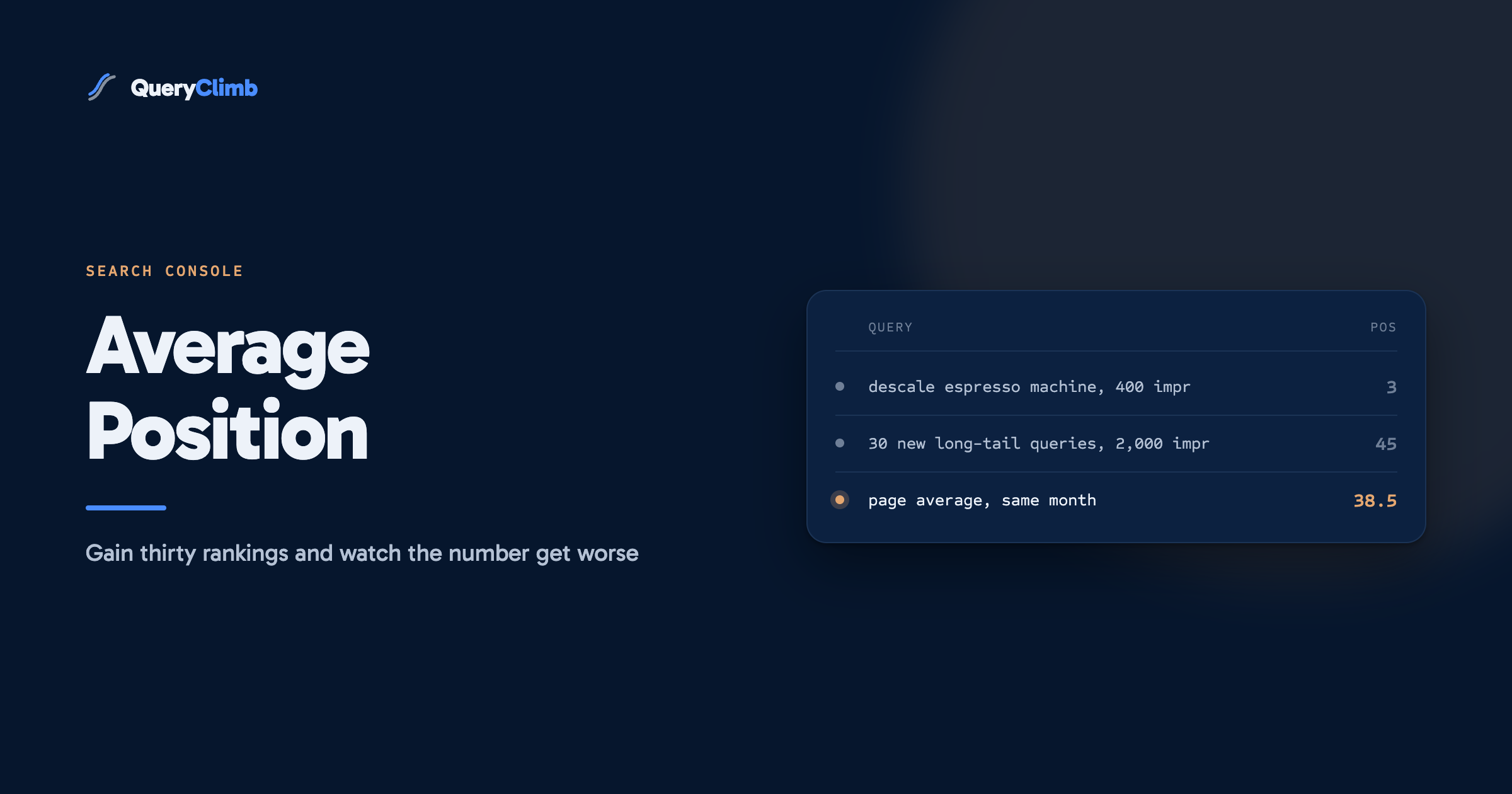
Average position in Google Search Console: what it measures, and why it misleads
Average position is a mean of your topmost rankings across every impression, so it moves when your impression mix changes even if no ranking did. How it is calculated, the two ways it lies, and how to read it properly.
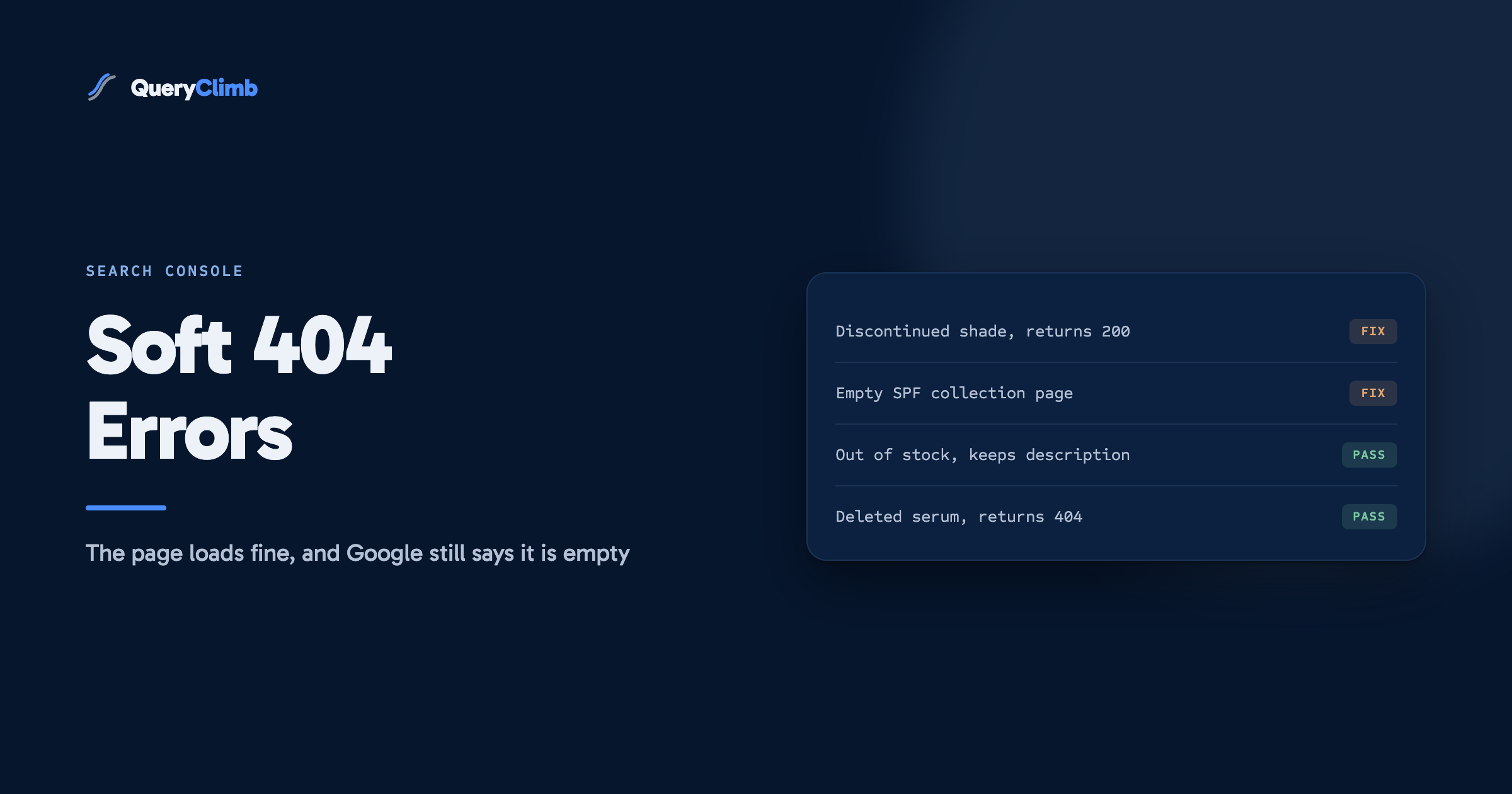
Soft 404 errors: what Google is telling you, and what to actually change
A soft 404 names a page that loads perfectly well. What the status really means, the three shapes it takes on an online store, and why changing the status code is usually the wrong fix.
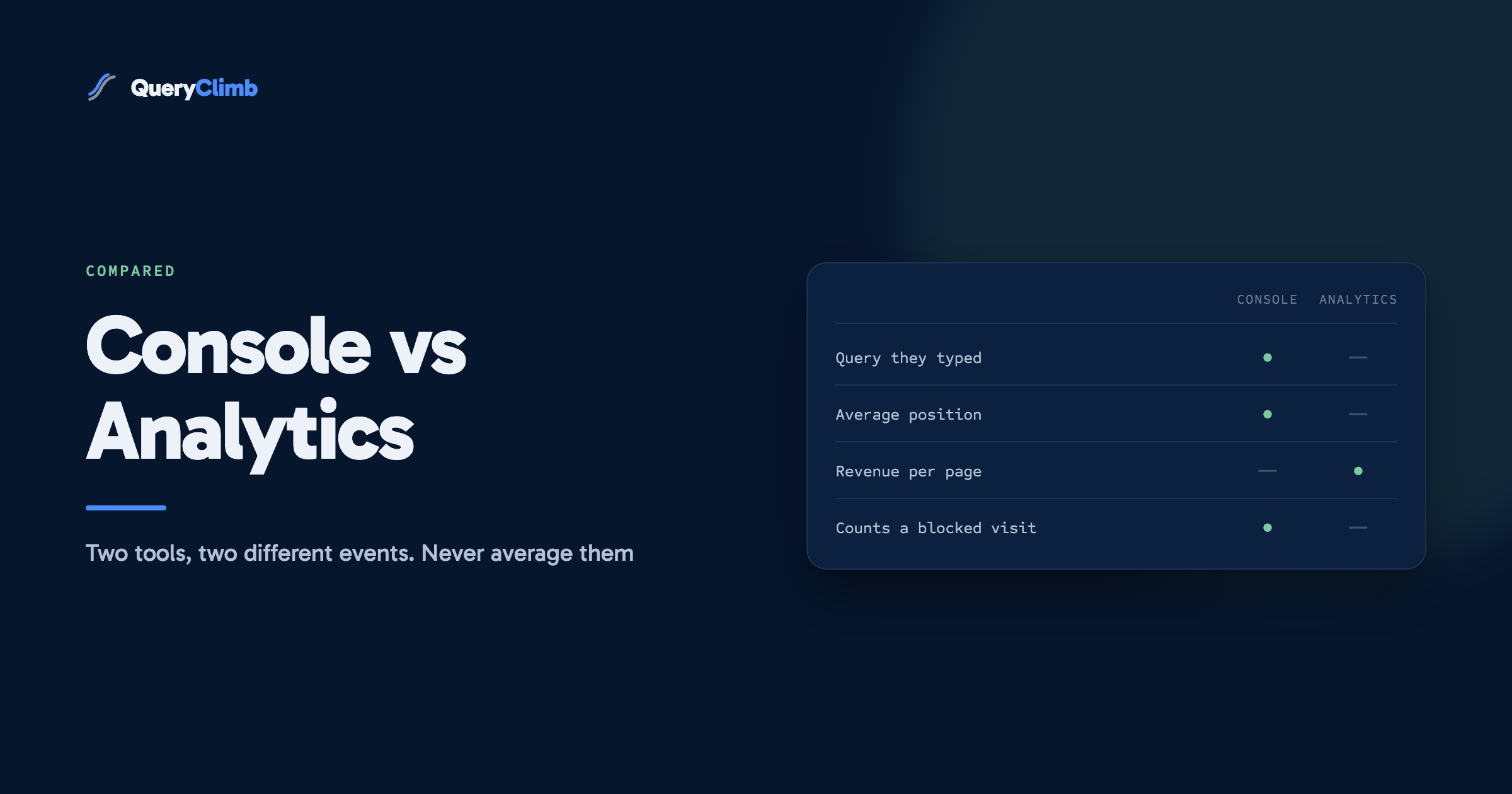
Google Search Console vs Google Analytics: which number to believe
The two tools measure different events, so the numbers will never reconcile. Here is what each one is actually counting, why Search Console always reads higher, and which one to trust for which question.
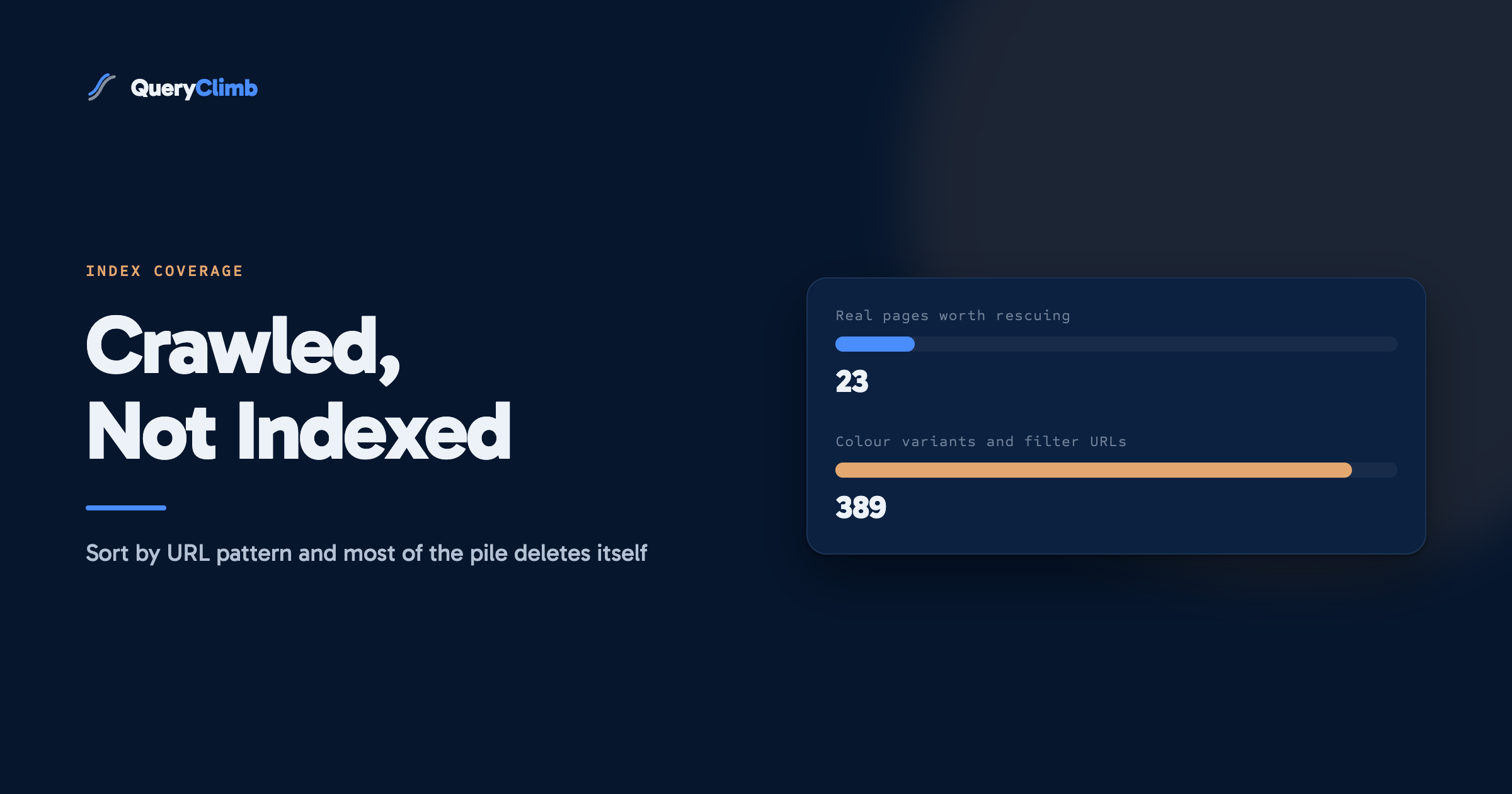
Crawled, currently not indexed: which of those pages to fix and which to delete
Google fetched the page, read it and chose not to store it. What that status really signals, how to separate the URLs worth rescuing from the ones that should not exist, and why requesting indexing does almost nothing.
Google Search Console MCP: connecting your search data to Claude or ChatGPT
What an MCP server for Search Console actually does, which ones exist, how to connect one without a Google Cloud rabbit hole, and the four places it quietly gives you wrong answers.
Editing robots.txt.liquid on Shopify: the three changes worth making
Shopify lets you edit robots.txt through a theme template, and most stores should not. Here is what the default already blocks, why disallowing a page will not remove it from Google, and the three edits that earn their risk.
Shopify meta descriptions: what they do, what they don't, and examples that earn the click
Meta descriptions do not rank your Shopify store, and Google rewrites a lot of them anyway. Here is where to set them, which pages deserve the effort, and worked examples for product, collection and blog pages.
Shopify redirects: when to create one and where it should point
Shopify gives you a redirect tool and no guidance on using it. Which dead URLs are worth redirecting, why the homepage is almost always the wrong destination, and how to find the 404s that are actually costing you traffic.
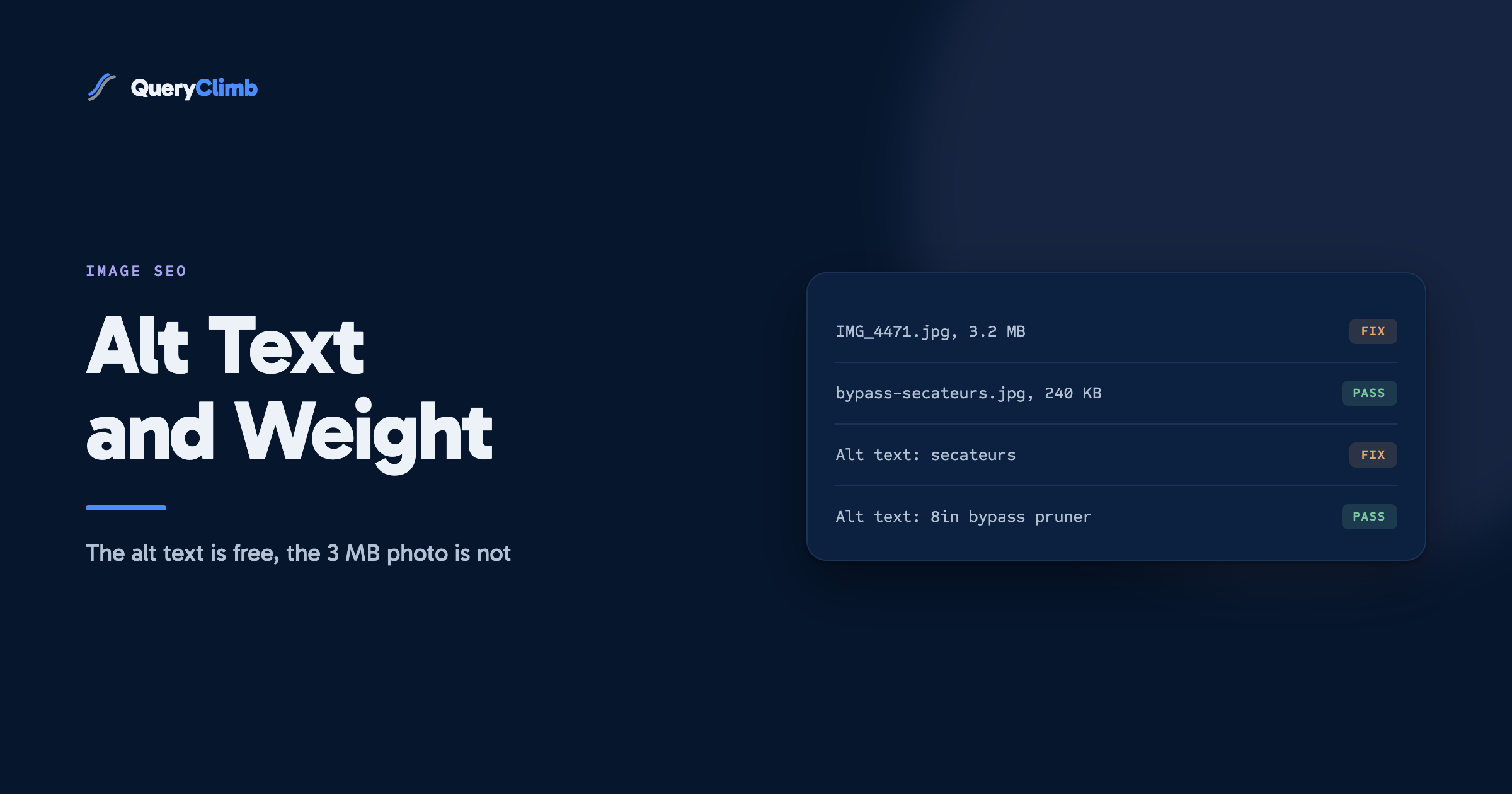
Shopify alt text and image SEO: what to write and what to ignore
Alt text is a two-minute job that will not move your rankings much on its own. Image weight will. What to write in the alt field, how to name and size files, and where images actually cost you traffic on Shopify.
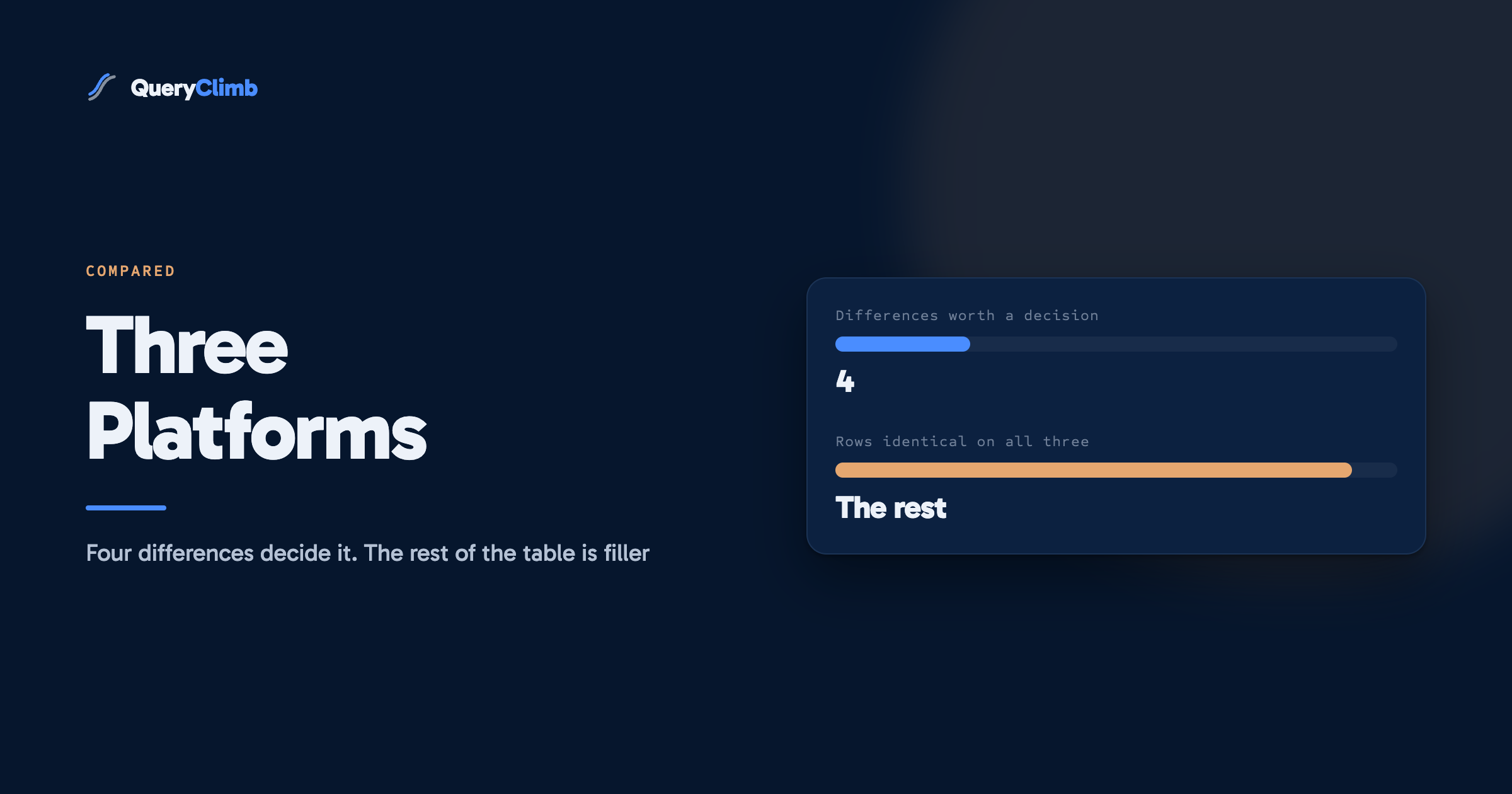
Shopify vs WooCommerce vs BigCommerce for SEO
The platform you pick moves your rankings far less than the sales pages claim. Where the three genuinely differ, where they are identical, and why SEO is close to the worst reason to choose one.
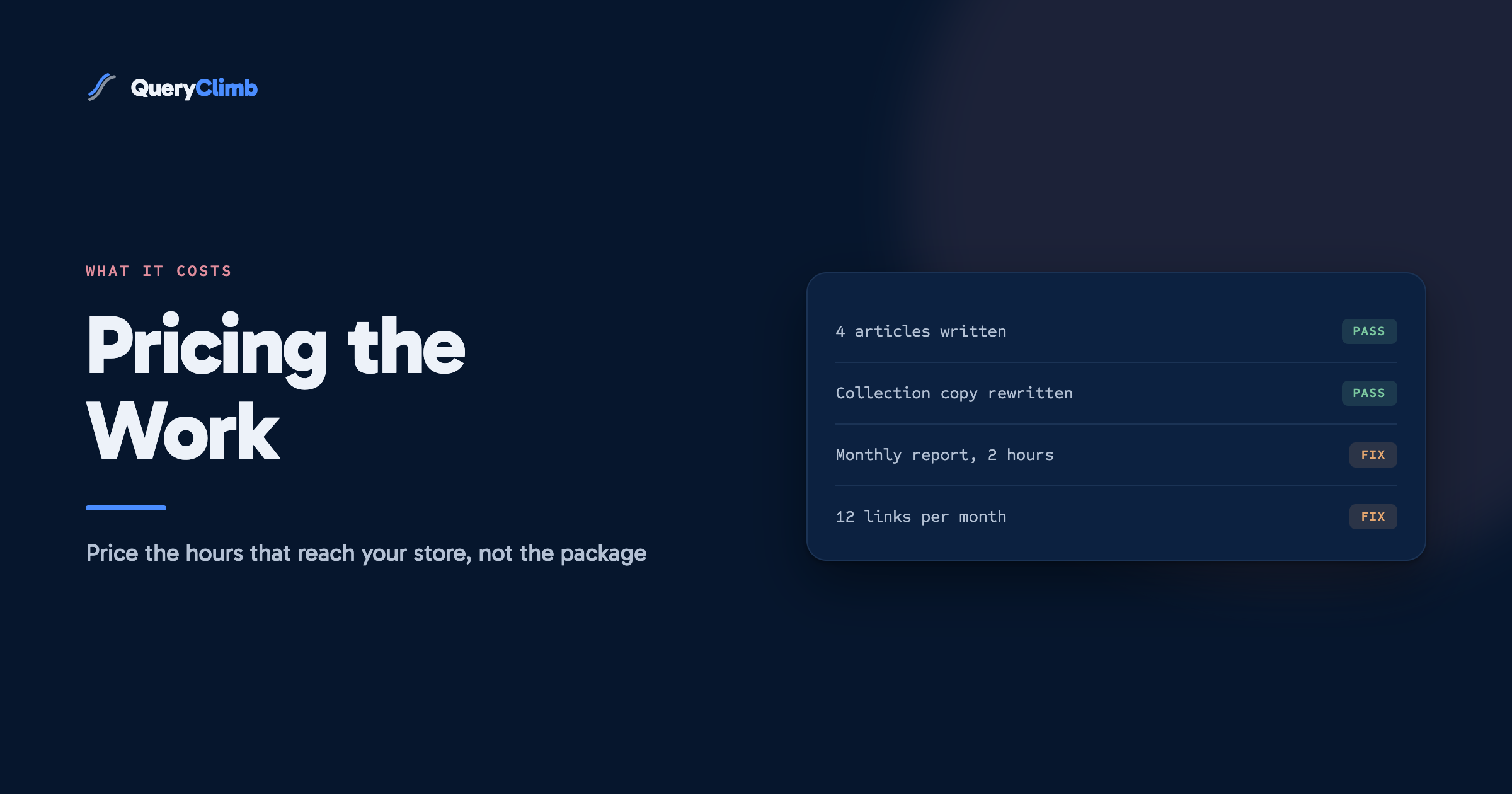
How much should Shopify SEO cost?
Agency retainers for Shopify SEO run from roughly $1,000 to $10,000 a month. What sits inside those quotes, which line items are worth paying for, what the same work costs if you do it yourself, and how to read a proposal before you sign.
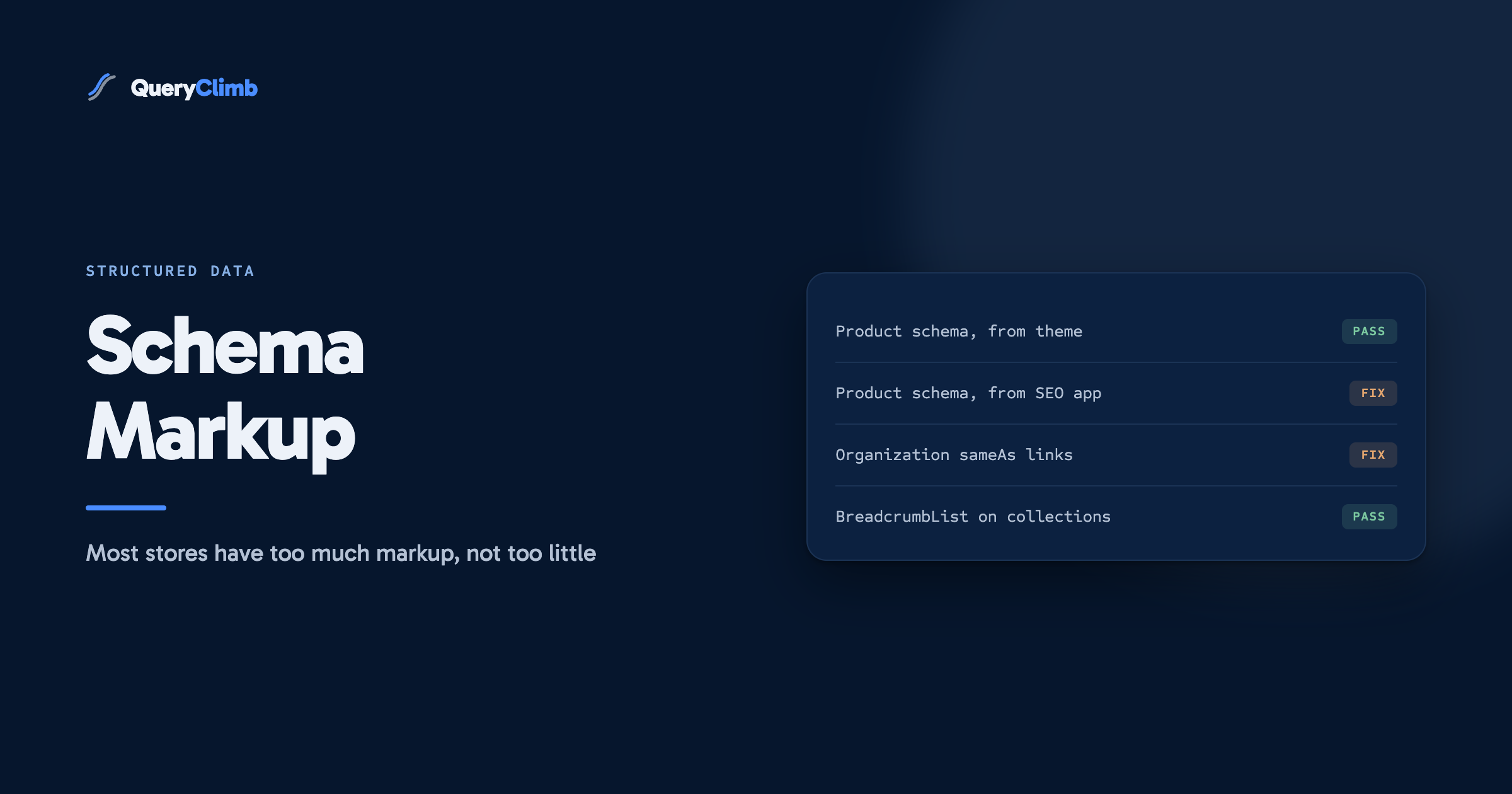
Shopify schema markup: what your theme already emits, and what to add
Most Shopify stores already ship most of the structured data they need. The real problems are three copies of the same markup and a missing Organization block. What to test, what to add, and what AI answer engines actually read.
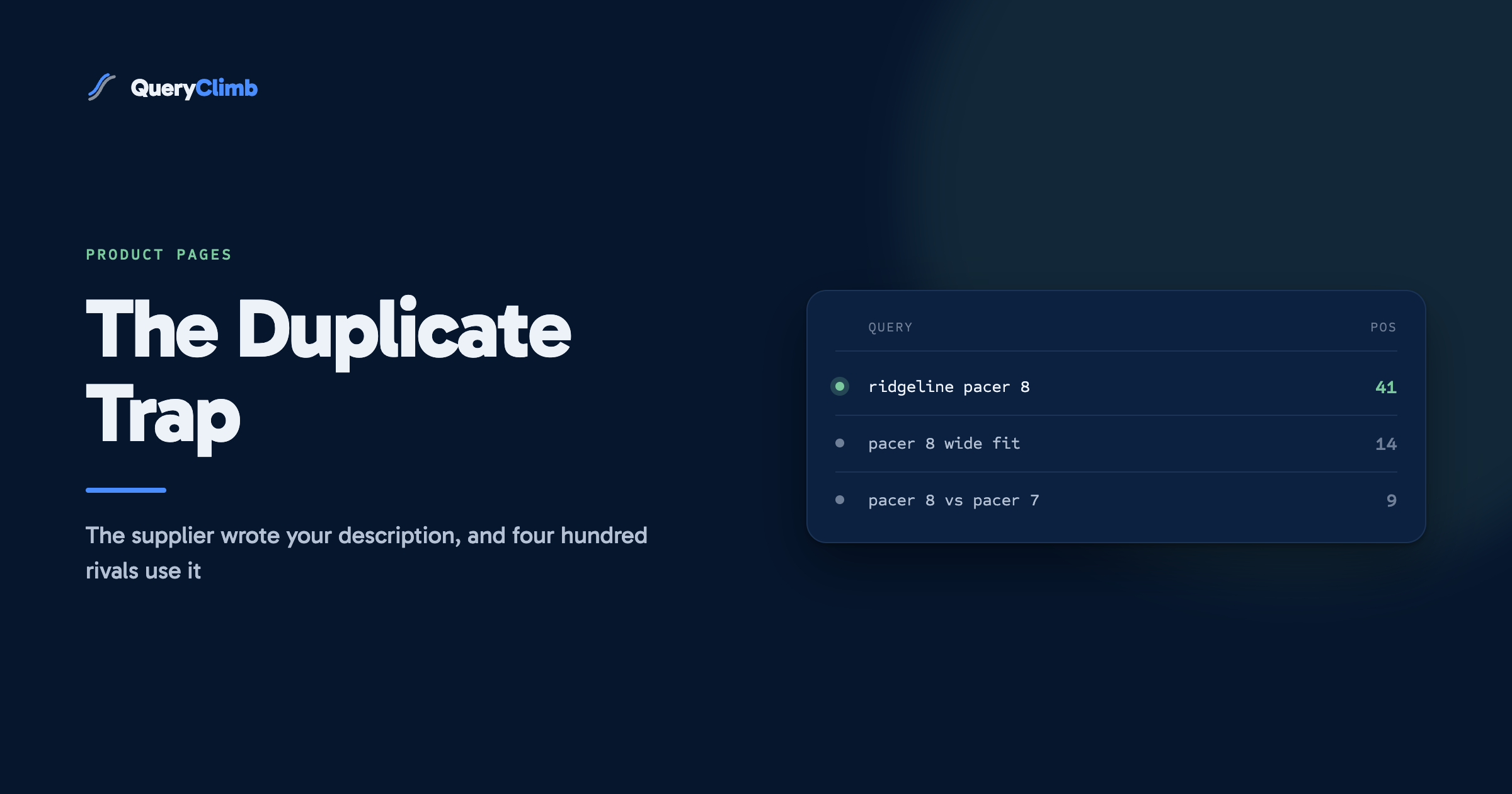
Product page SEO for Shopify: descriptions, schema and the duplicate trap
Most Shopify product pages fail for one reason: the description came from the supplier and appears word for word on hundreds of other stores. What to write instead, which schema is worth adding, and which pages to fix first.
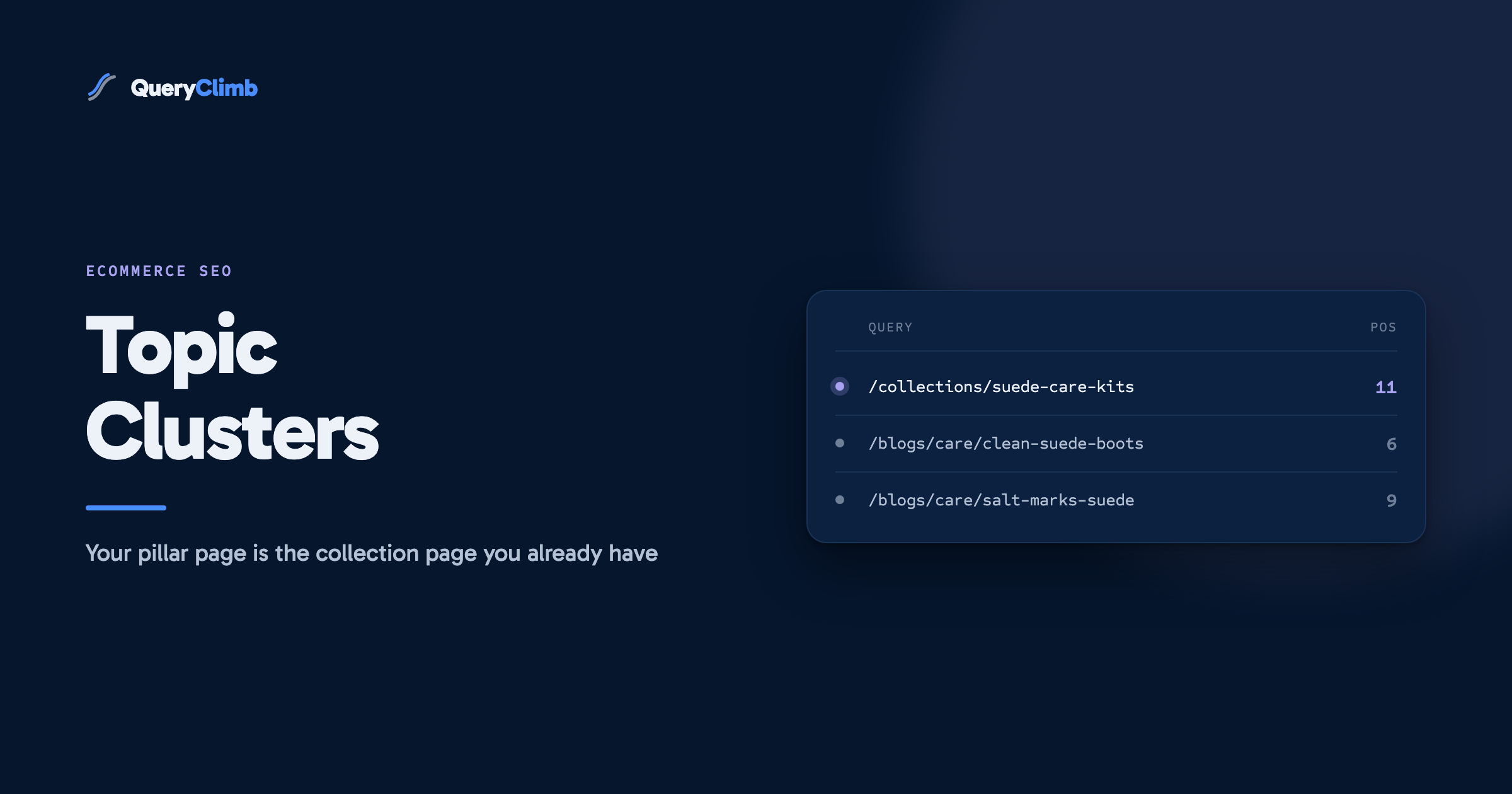
Topic clusters for ecommerce: pillar pages that sell
The cluster model was written for software blogs. On a store, the most valuable page in the cluster is usually a collection page, which changes what the pillar is, what the spokes cover, and which links matter.
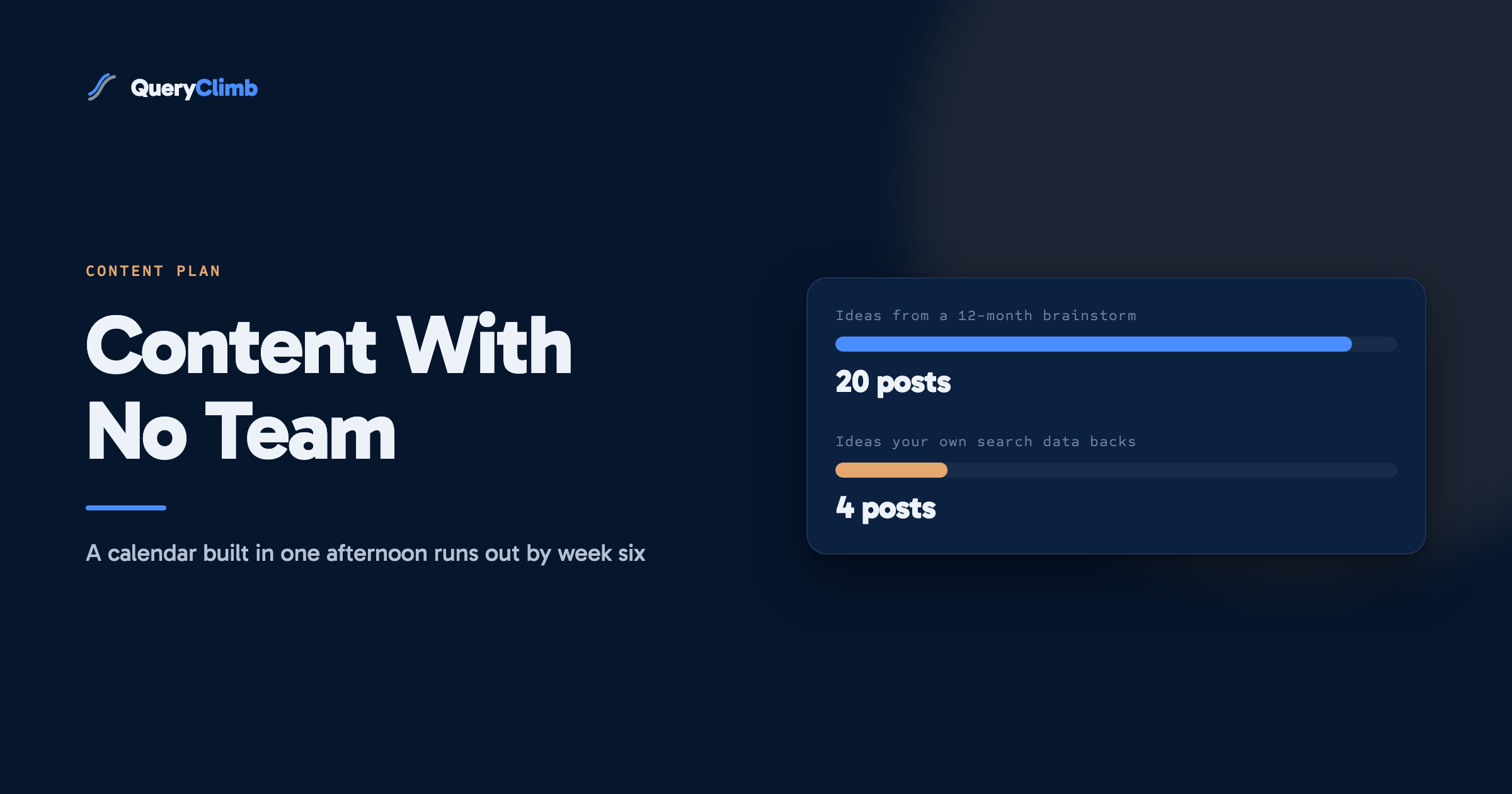
Ecommerce content marketing for a store with no content team
The version that survives a one-person store: four hours a week, topics pulled from your own Search Console rather than a keyword tool, and a rule for what not to write. No calendar template with sixty empty rows.
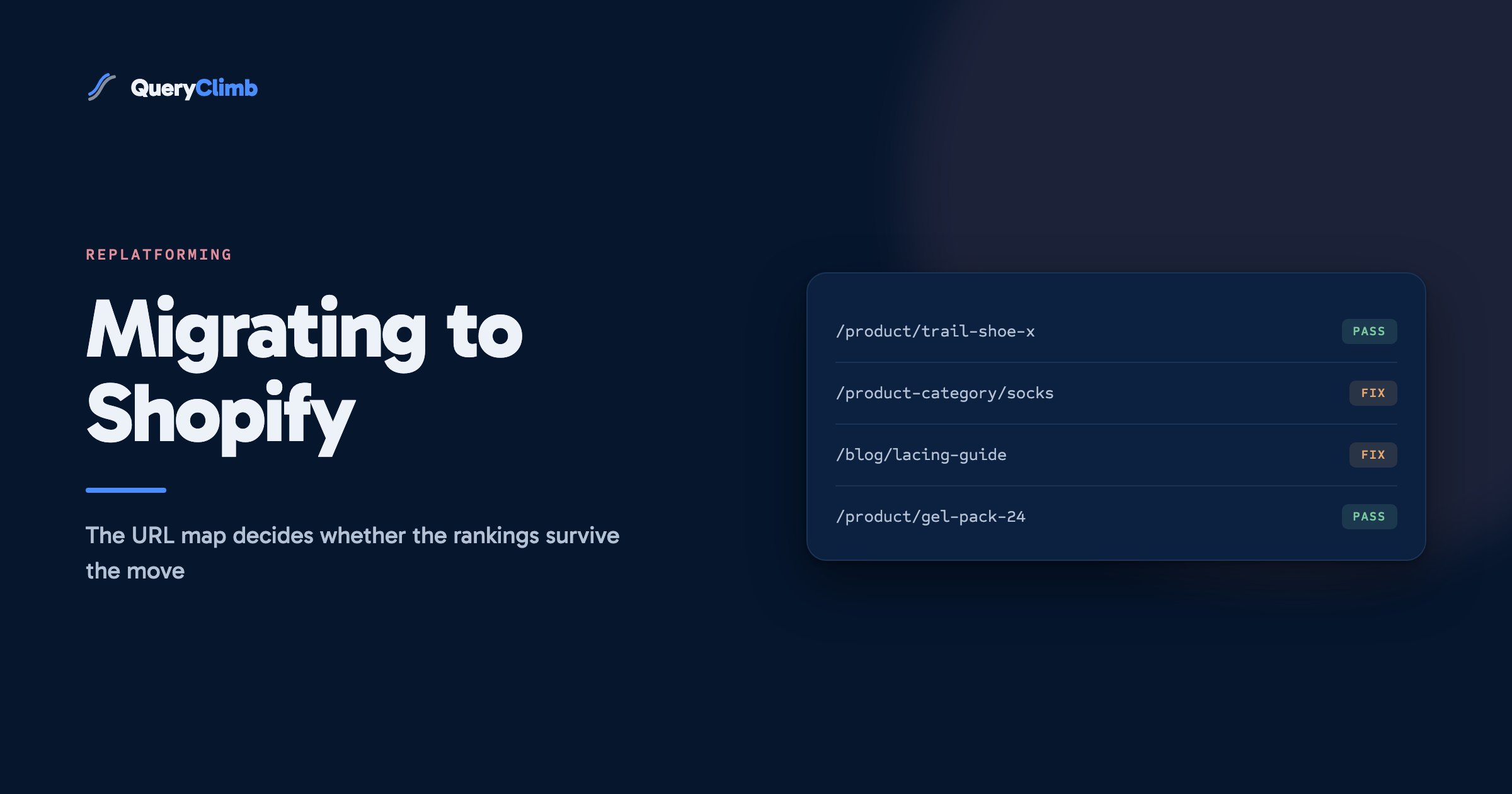
Replatforming to Shopify without losing your rankings
A migration does not fail because Shopify ranks worse than the platform you left. It fails because the URL map was treated as a launch-week chore. How to build one that holds, what to check on day one, and what a normal dip looks like.
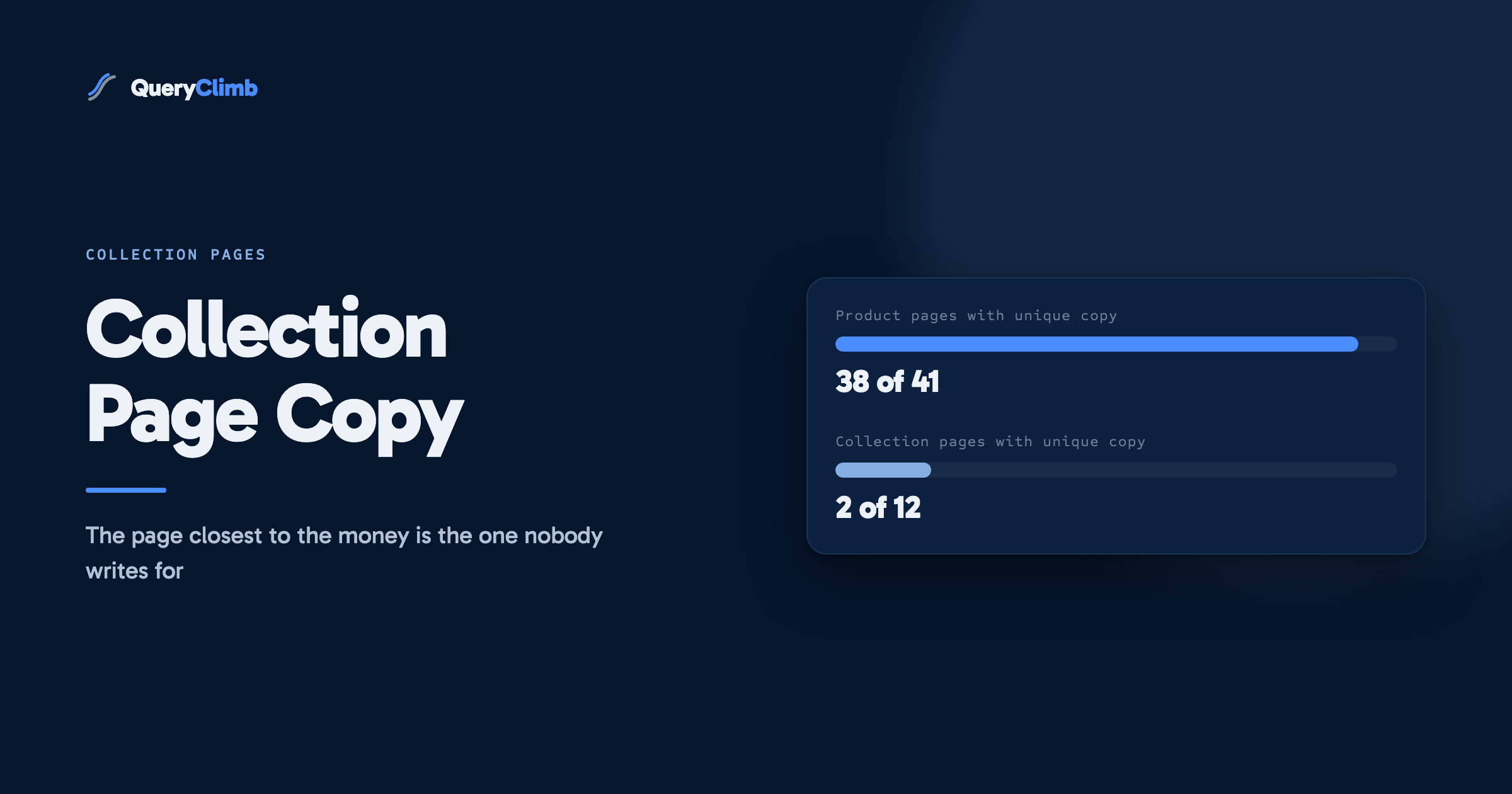
How to write Shopify collection page descriptions that rank
Collection pages sit one click from checkout and most of them contain no words at all. What to put on them, where to put it, how long it should be, and which collections deserve none of this.
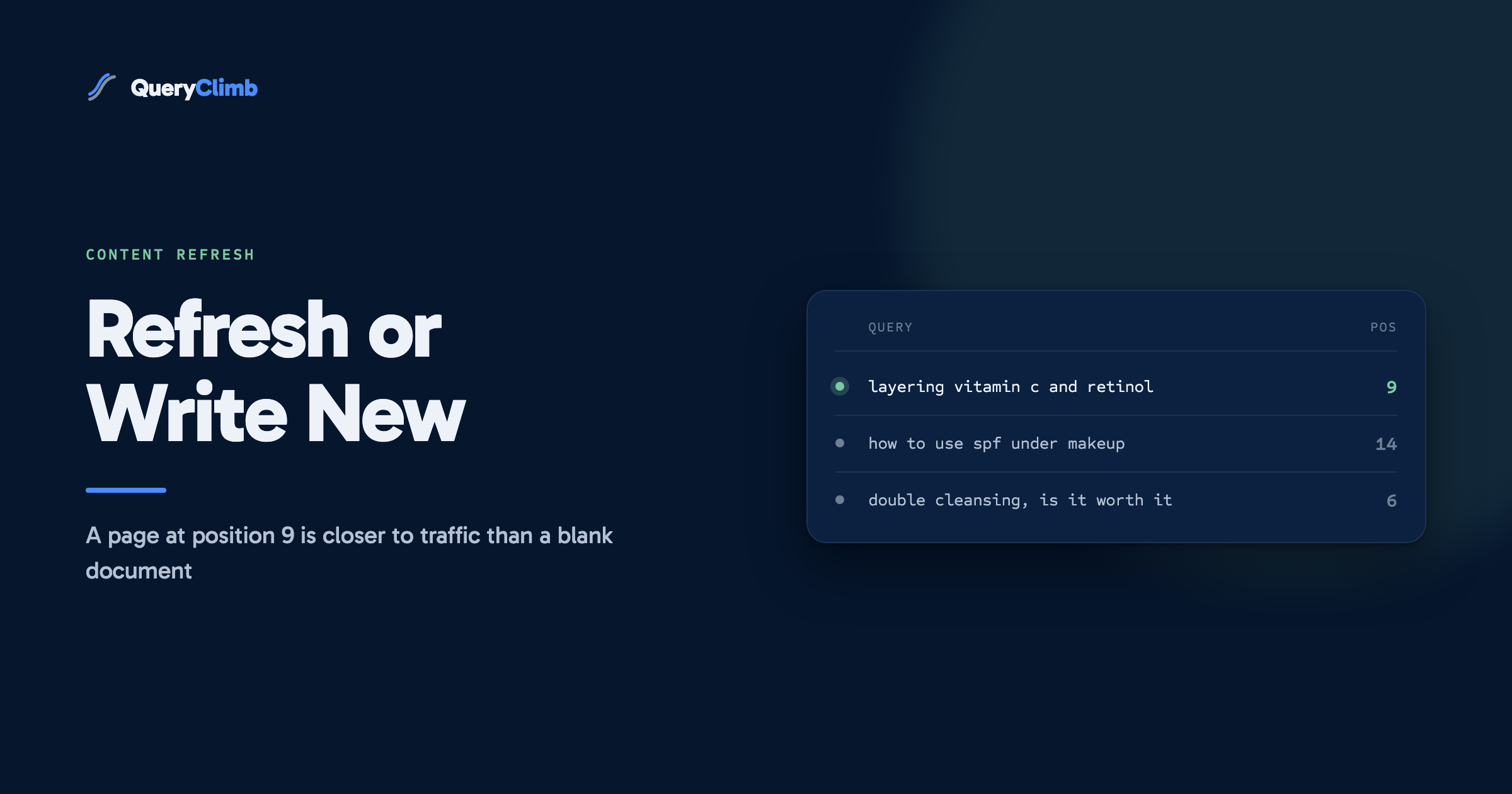
Content refresh SEO: when to update an old post instead of writing a new one
A page that already ranks at position 9 is closer to traffic than a blank document. How to find decaying posts in Search Console, the four verdicts to give each one, what actually changes in a refresh, and when publishing something new is the right call instead.
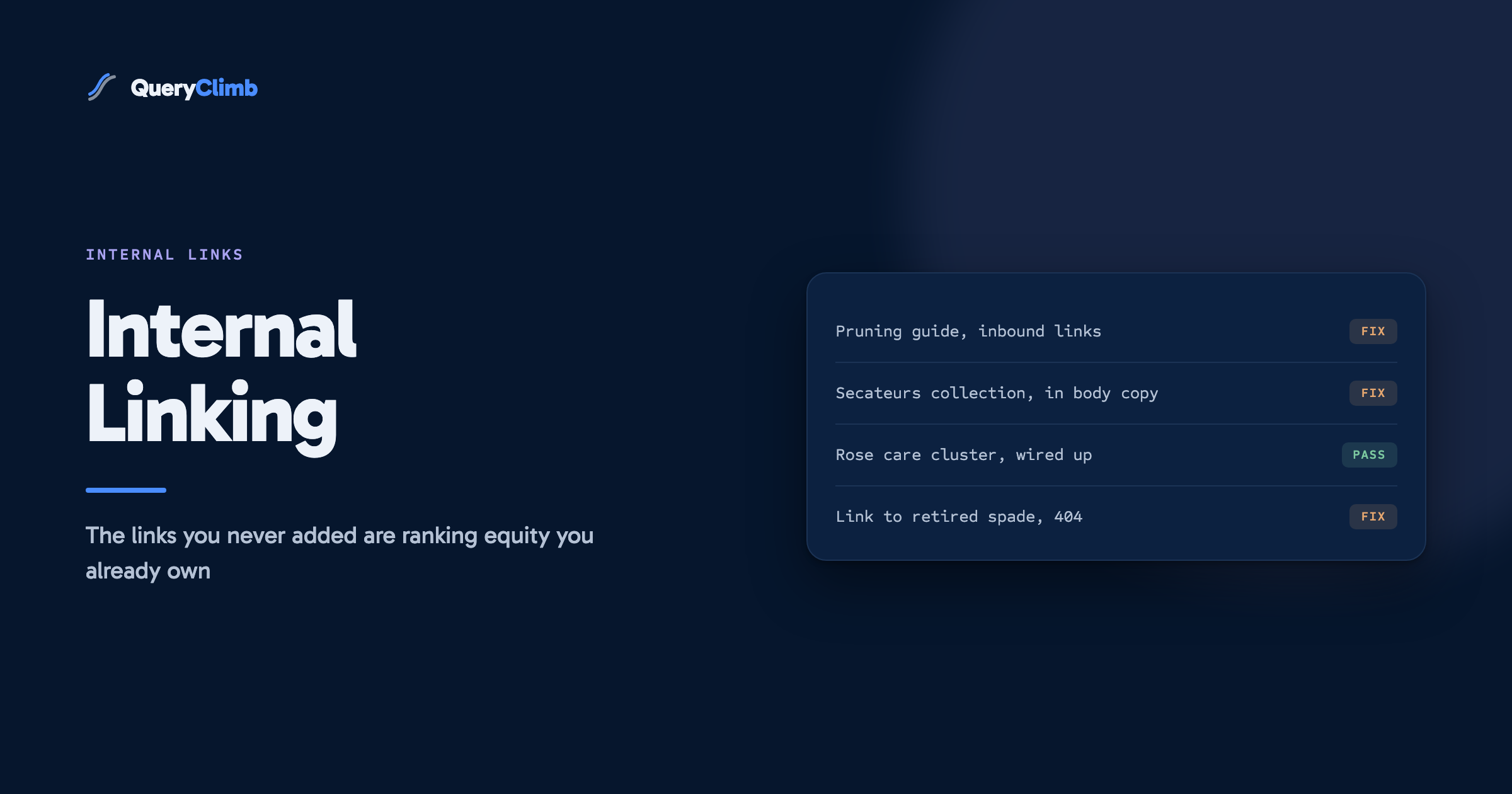
Internal linking for ecommerce: the Shopify version that actually moves rankings
Internal linking on a store is a routing problem, not a plugin setting. How to wire articles to the collection pages that earn, rescue orphans, pick anchors that read naturally, and run the sweep as a quarterly routine.
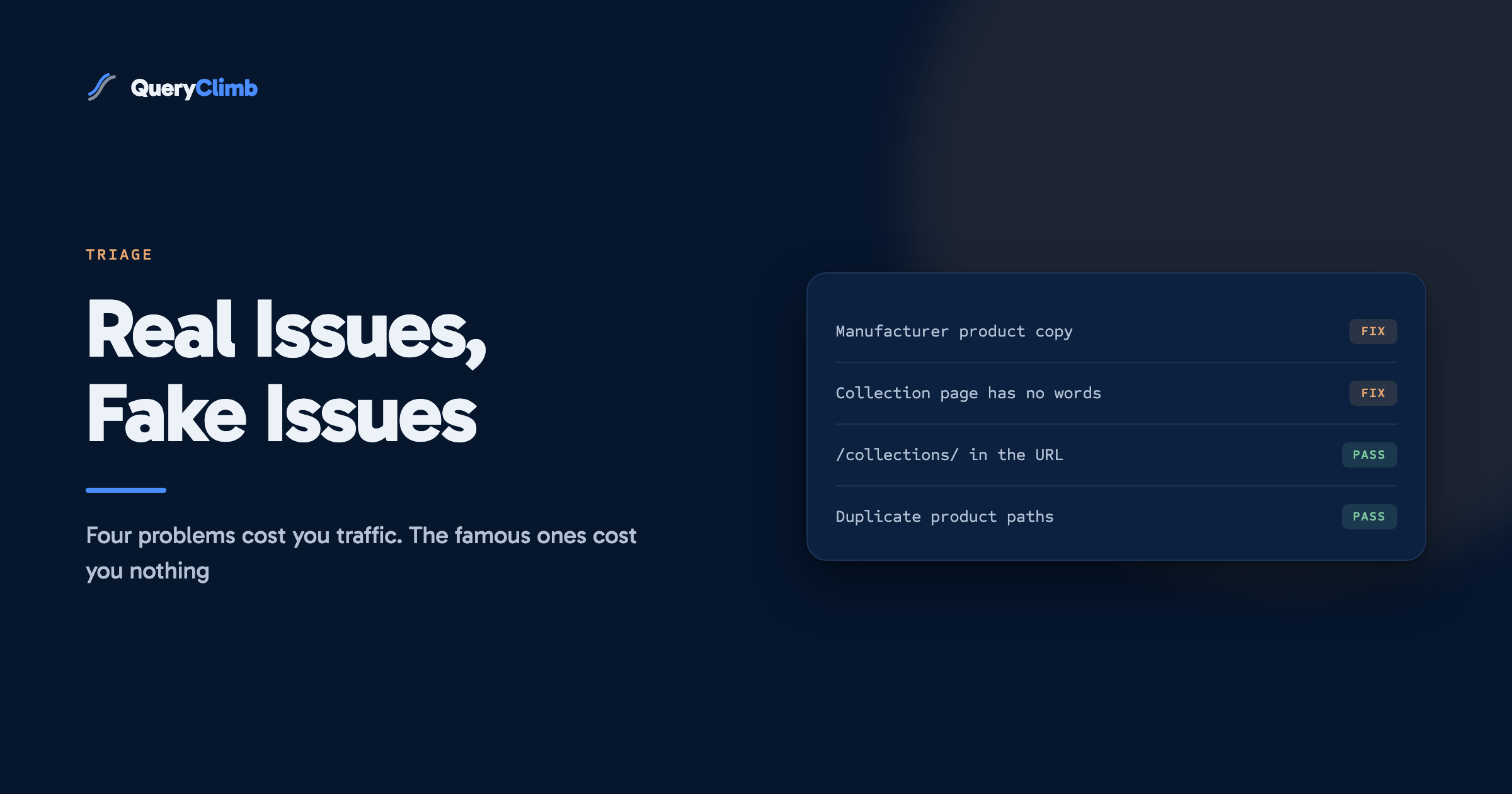
Shopify SEO issues: the ones that are real, and the ones that are not
Forum threads about Shopify SEO are dominated by problems that cost you nothing. Here is the triage: the four issues that genuinely suppress a store's traffic, the platform complaints that are noise, and how to tell which one you have.
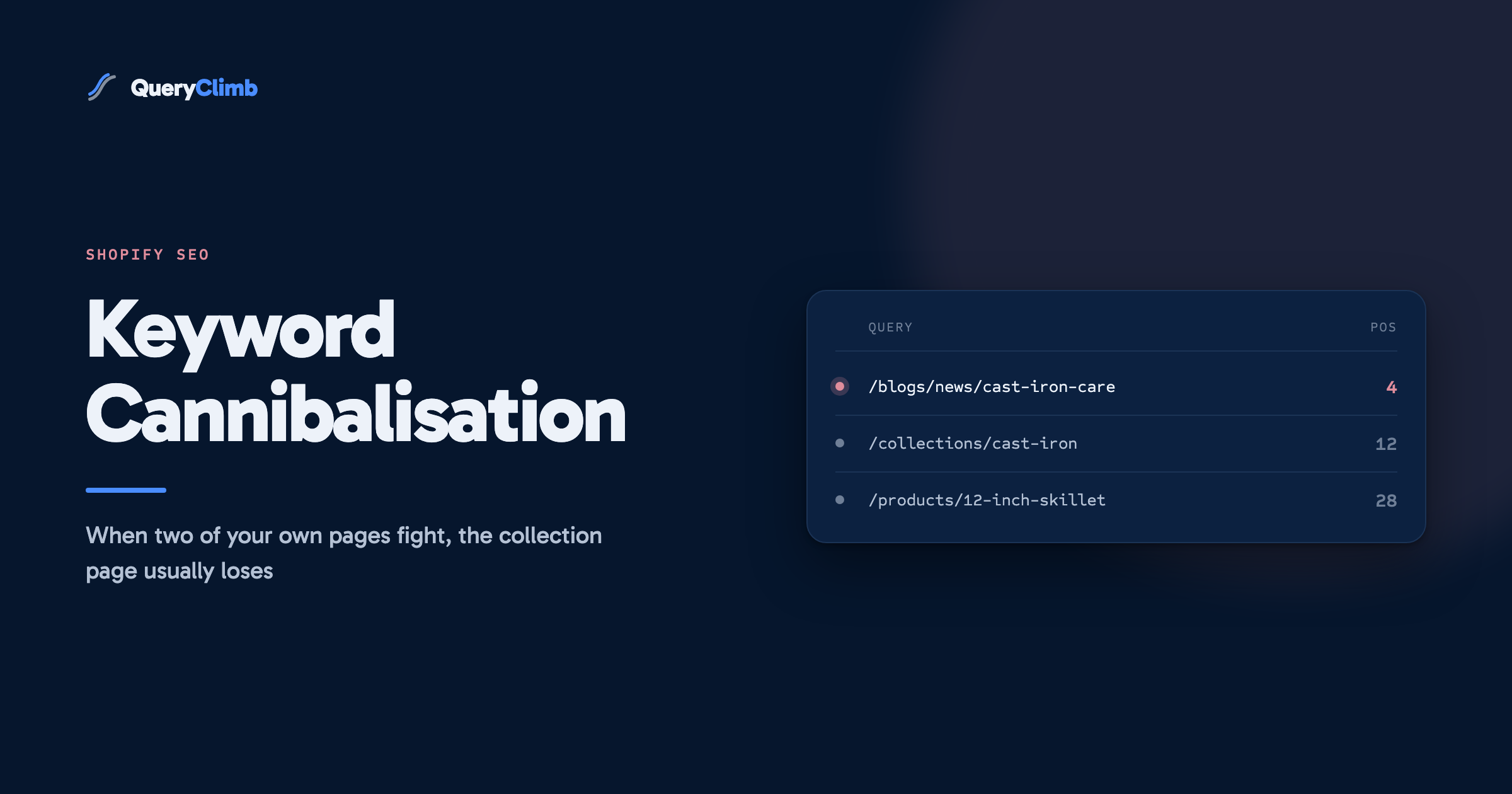
Keyword cannibalisation on Shopify: how to find it and fix it
Two of your own pages competing for one query costs a Shopify store more than it costs a blog, because the page that loses is usually the collection page that takes the money. The find-and-fix method, using only Search Console.
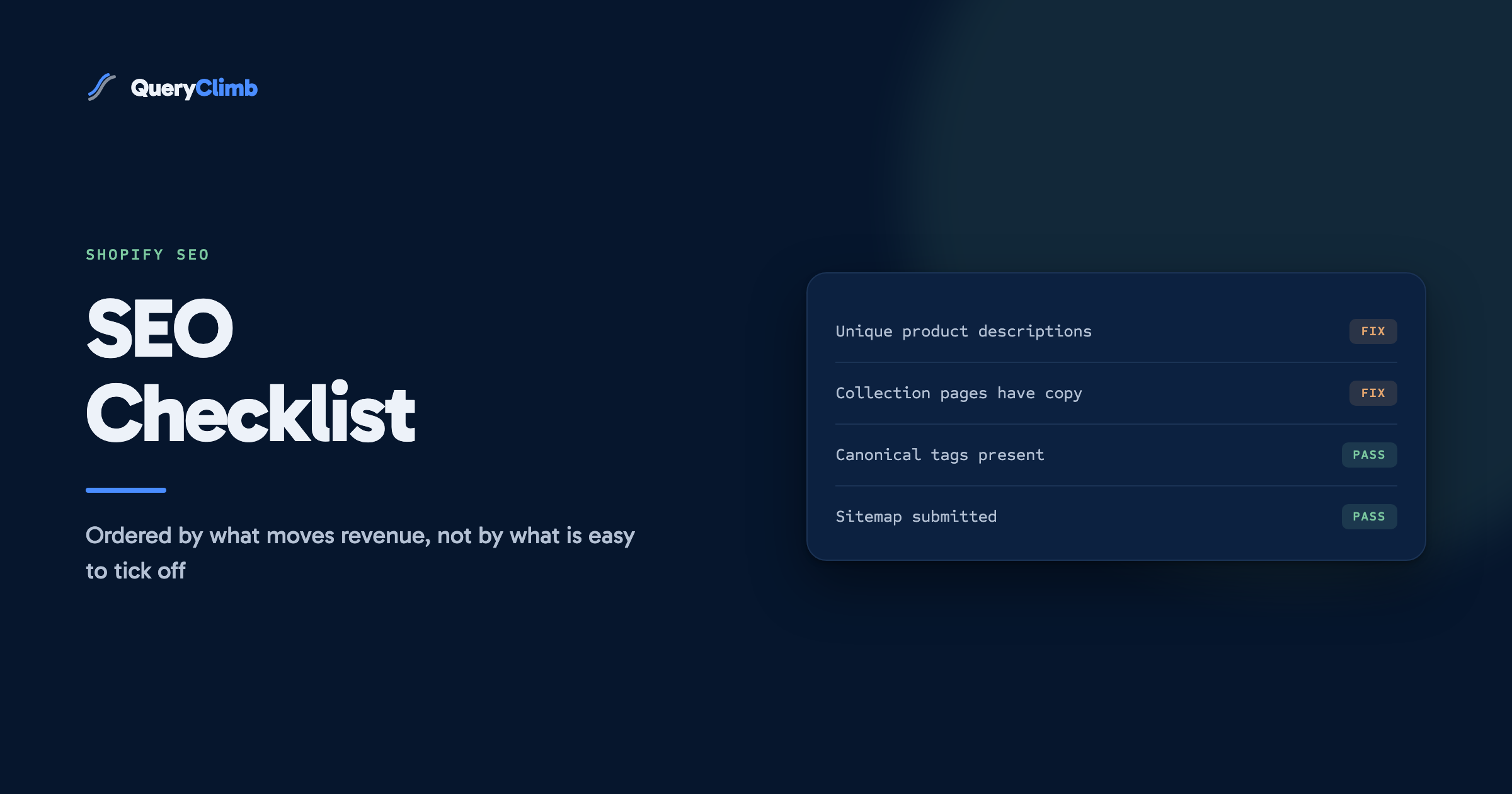
The Shopify SEO checklist that is actually worth working through
Most Shopify SEO checklists are fifty items in no particular order, and a good third of them change nothing. This one is ordered by what moves revenue, and it names the items that are theatre.
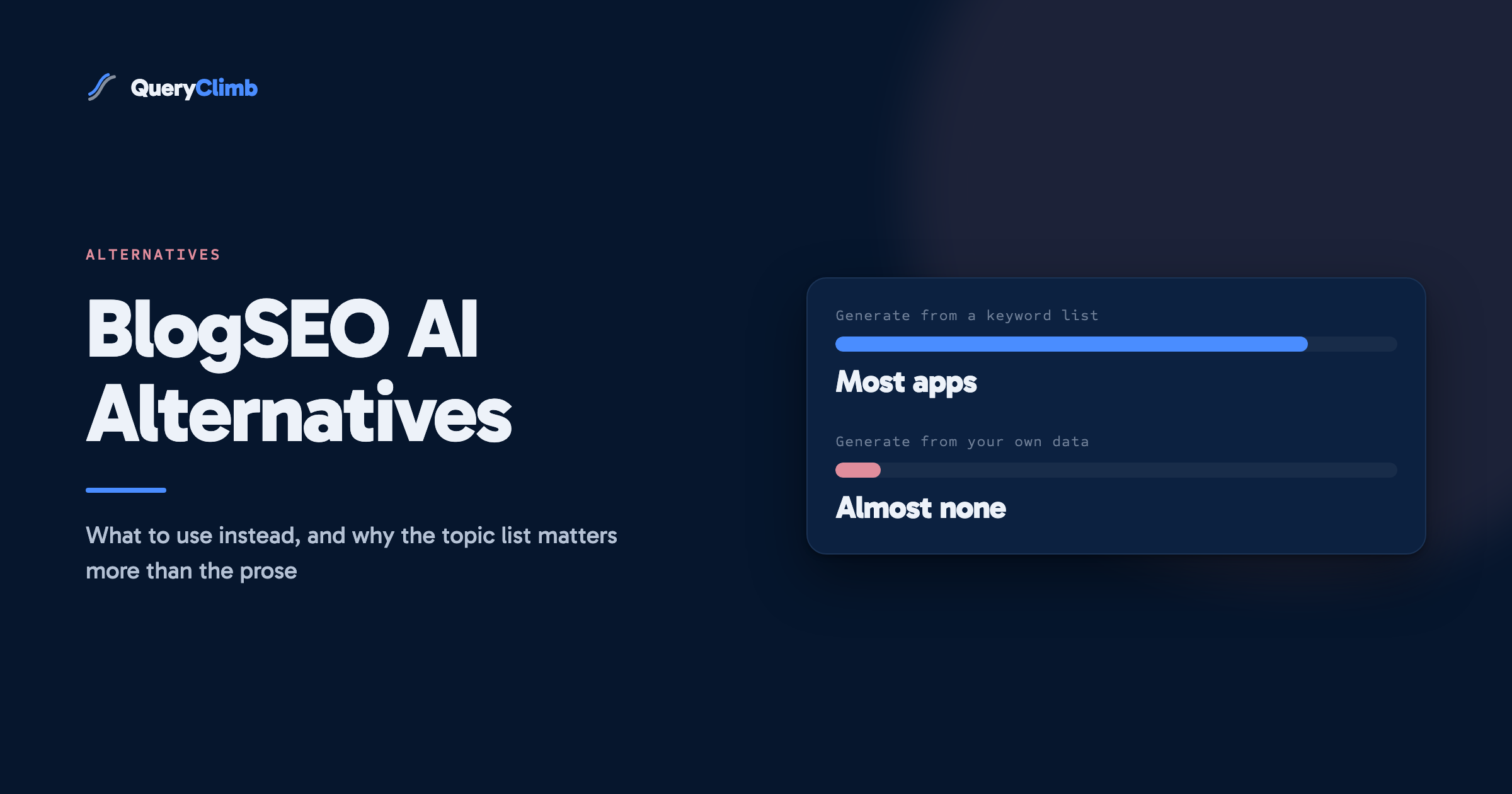
BlogSEO AI alternatives for Shopify: what to use instead in 2026
BlogSEO AI's App Store listing has collapsed. If you relied on it, here are the honest alternatives for Shopify blog content, from free workflows to full tools, with prices checked August 2026.
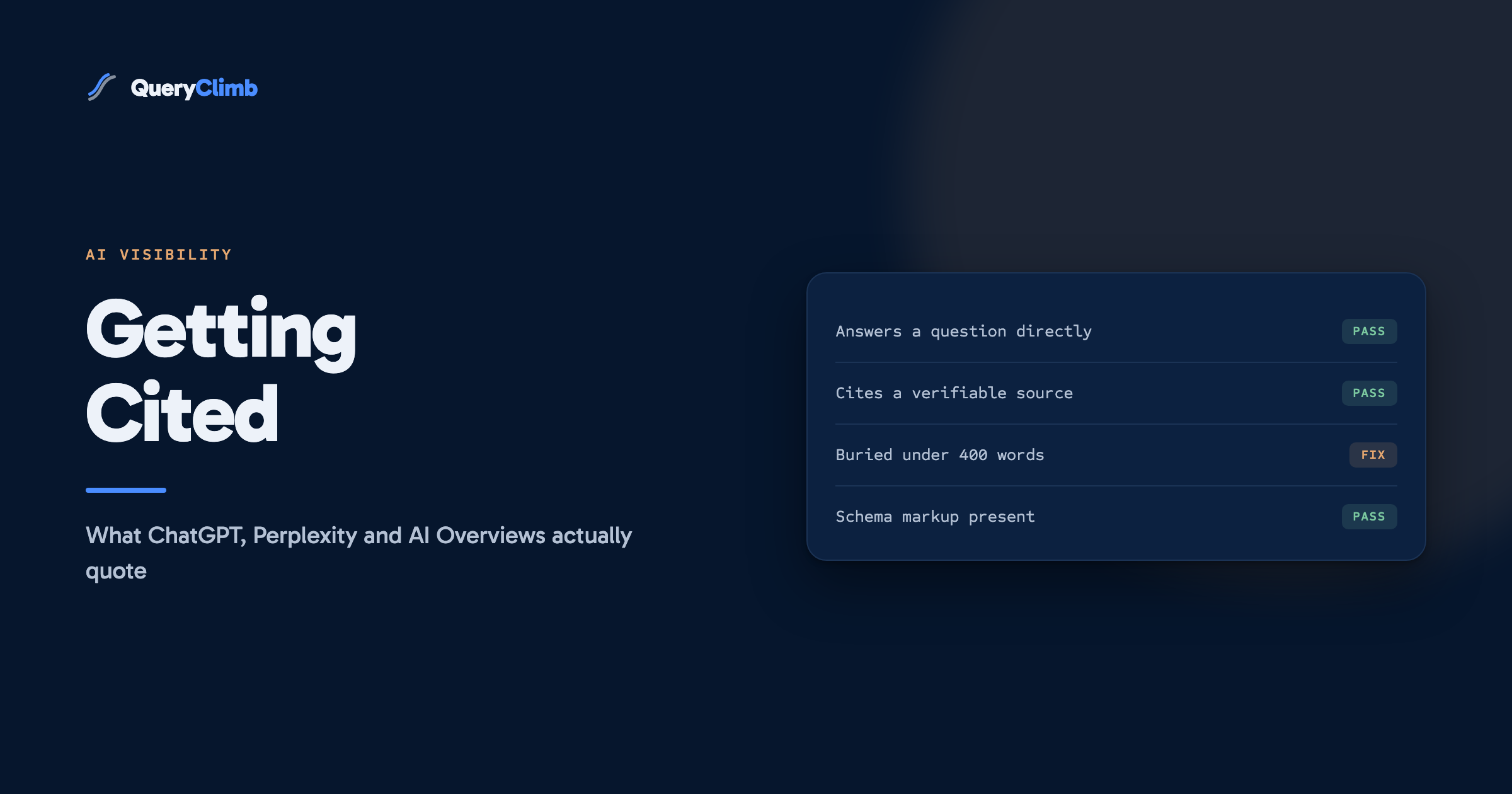
How to get your Shopify store cited by ChatGPT and Google AI
One store's AI-search impressions went from 425 a day to 11,000 in three months. What generative engines actually cite, the exact changes that correlate with it, and how to measure it in Search Console.
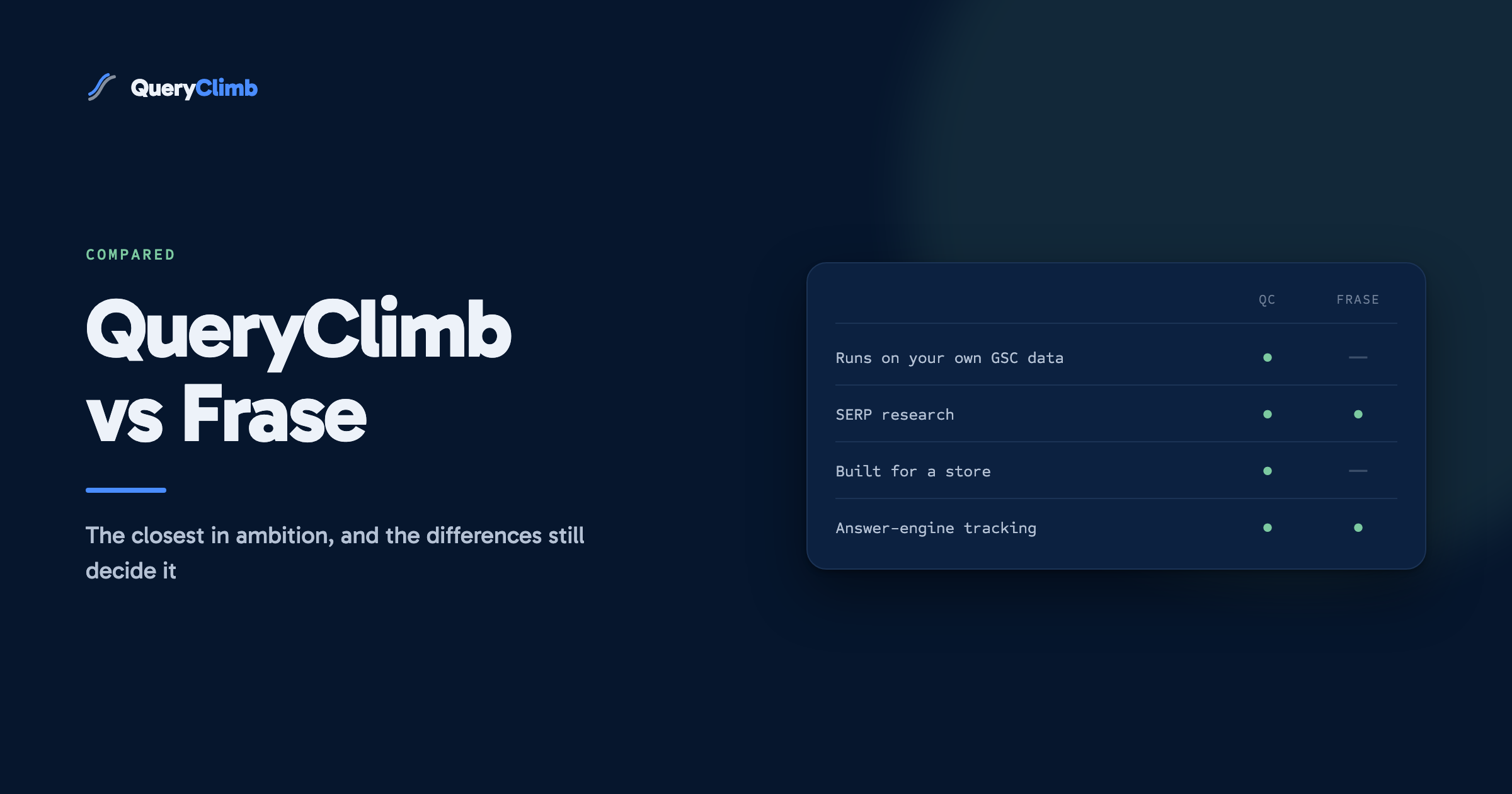
QueryClimb vs Frase: content workflow tools compared for Shopify stores
Frase is the closest thing to QueryClimb in scope: briefs, AI drafting, a content calendar, GEO scores. Where the two actually differ, tier by tier, with prices checked August 2026.
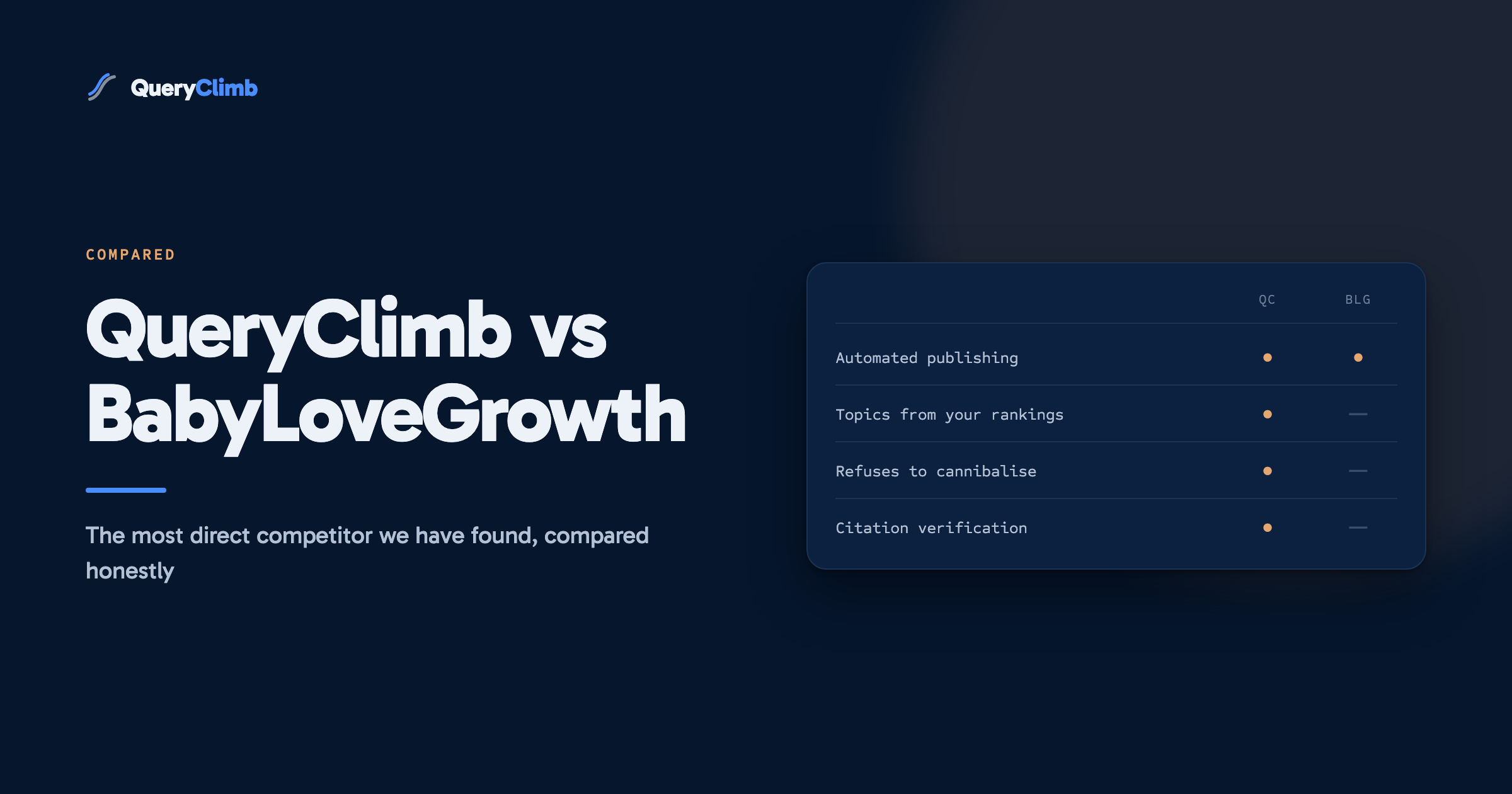
QueryClimb vs BabyLoveGrowth: automated SEO content for Shopify, compared
Both publish articles to your store on autopilot. They disagree about where topics come from and whether you should buy backlinks. An honest comparison, BabyLoveGrowth pricing checked 22 August 2026.
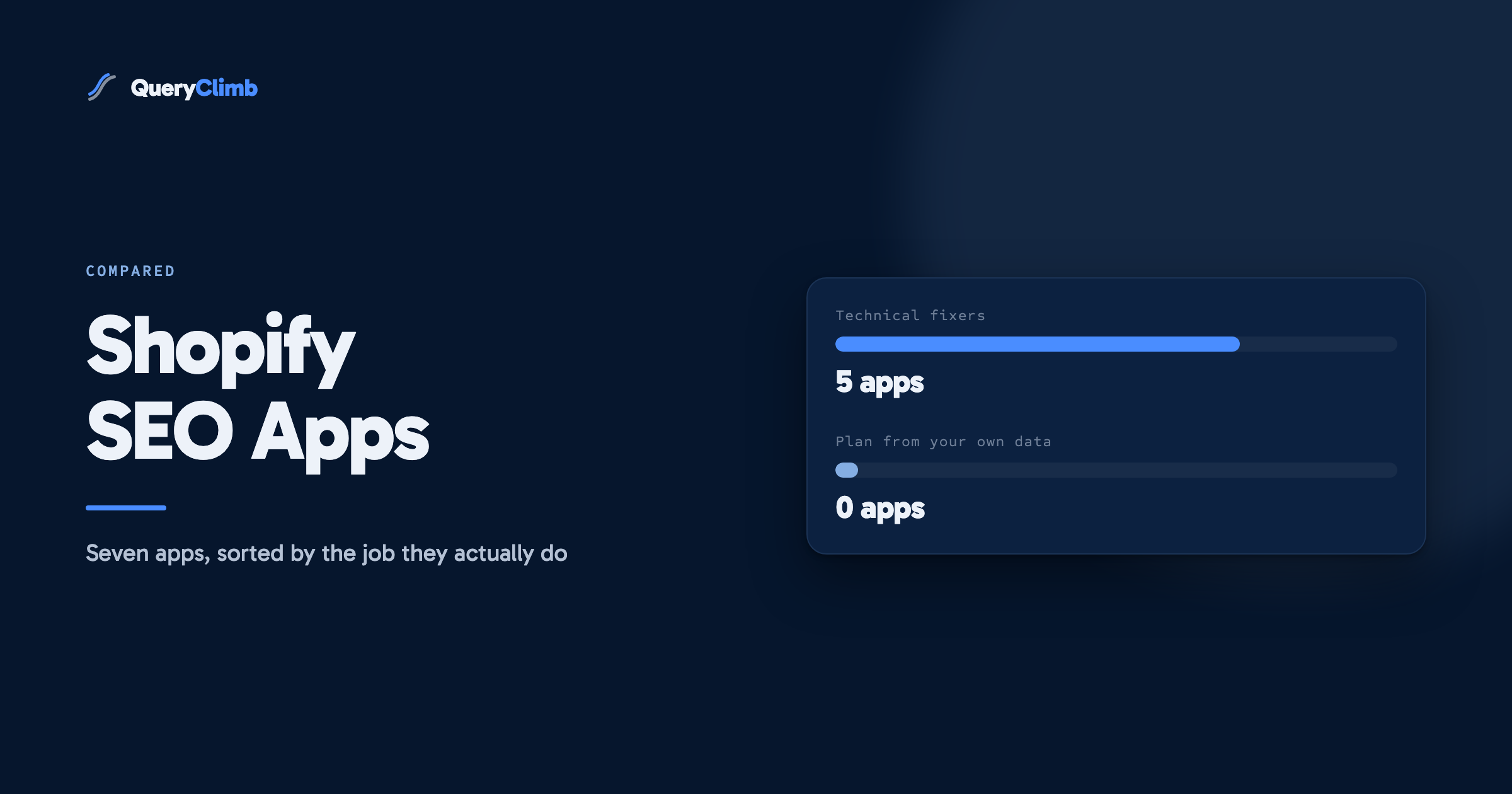
The best Shopify SEO apps in 2026, compared honestly
Seven SEO apps and the AI content category, compared by the job they actually do. Every price checked against the App Store in August 2026, with a decision framework by store situation.
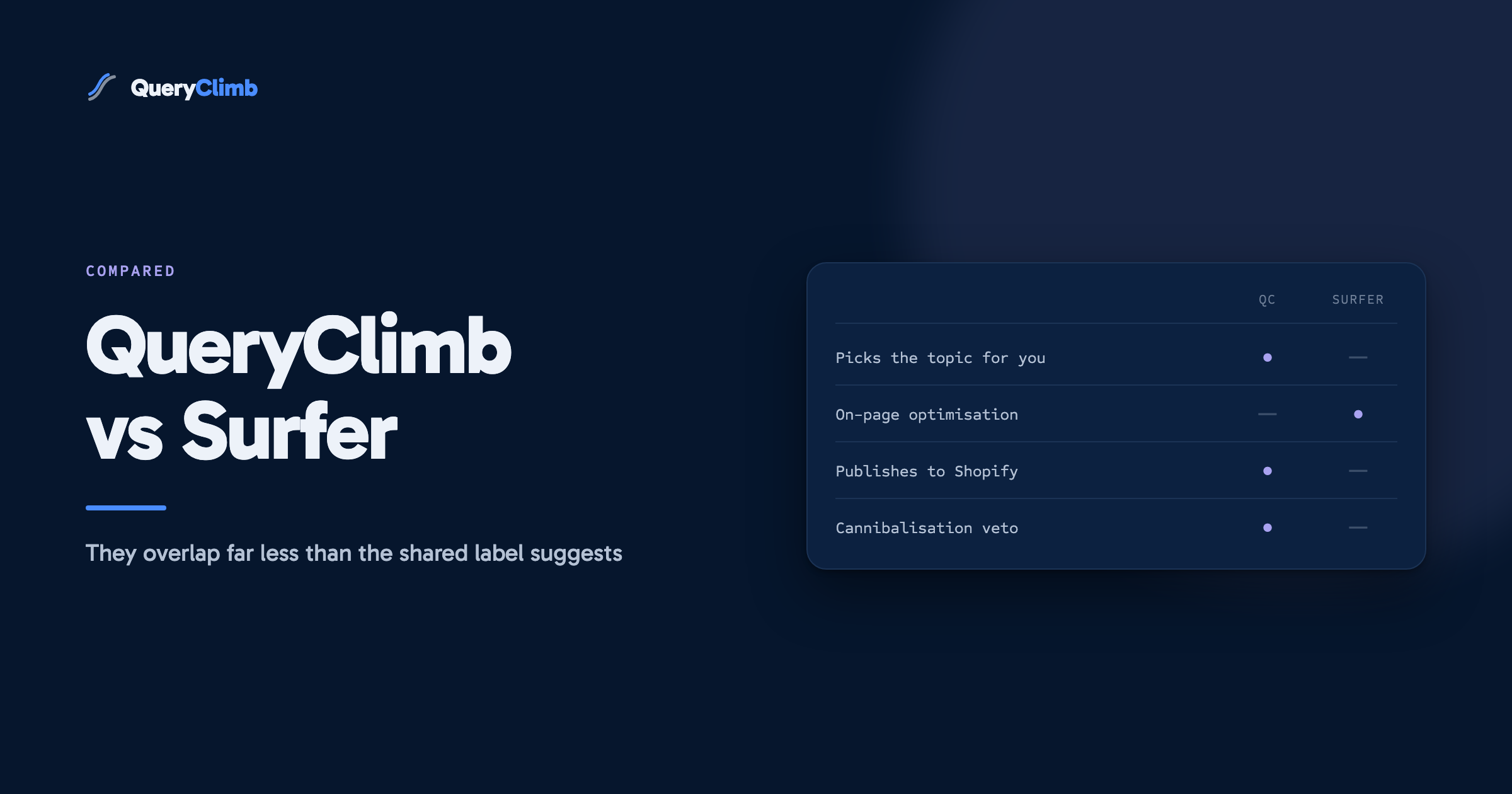
QueryClimb vs Surfer SEO: which fits a Shopify store?
Surfer is the benchmark for on-page optimisation. QueryClimb runs the whole publish loop from your own Search Console data. A detailed, honest comparison with tier-by-tier pricing checked August 2026.
Shopify blog SEO: the working system behind a store that ranks
Not another checklist of 40 tips. The complete weekly loop an independent UK supplements store uses to plan, write, link and publish content that ranks: signal, classify, draft, link, watch.
How to find striking distance keywords in Google Search Console
The highest-ROI content work in SEO: queries where you already rank at position 5 to 20. The complete Search Console workflow, with filters, a prioritisation formula, a worked example and the mistakes that waste the opportunity.